7 Content Metrics Marketing Leaders Need to Be Mindful of To Drive Business Strategy Success

Thirty years ago, brands controlled marketing messages. Big businesses dominated traditional marketing spaces like television, radio, and newspaper. That’s in the past, though. Today, the internet has leveled the playing field, giving all companies access to customers at a much cheaper rate.
But the internet didn’t just give small businesses a fighting chance; it flipped the marketing script. With AdBlock and skippable ads, customers can ignore unwanted advertising. So, marketing leaders have had to change tactics.
Enter content marketing, which attracts and engages audiences with digital media tailored for qualified leads. The content – blogs, videos, podcasts, or ebooks – is meant to create brand awareness and establish expertise rather than promote products and services outright.
High-quality content takes time and money. To justify the resources needed for content marketing programs, you need to monitor several content marketing metrics. This helps you prove content marketing ROI. The relevant metrics you will monitor depend on your content marketing strategy and goals.
Here are seven key metrics you should track to ensure content marketing success.
1. Click-Through Rate
The click-through rate (CTR) measures how many people click on a link or call-to-action (CTA) on your website or message. Tracking CTR provides insight into the type of content that interests your customers. For example, if infographics for your lead generation software generate a higher CTR than ebooks, consider creating more image-based media.
To calculate your click-through rate, divide the number of clicks by the number of views or impressions and multiply by 100.
For example, let’s say you’re doing email marketing for ecommerce brands. And out of the 800 email recipients, 500 open the email, and 75 click the CTA; your CTR will be 15%. That’s (75/500) X 100
If it’s paid search or an SEO campaign, you can access your CTR from analytics software like Google Search Console.
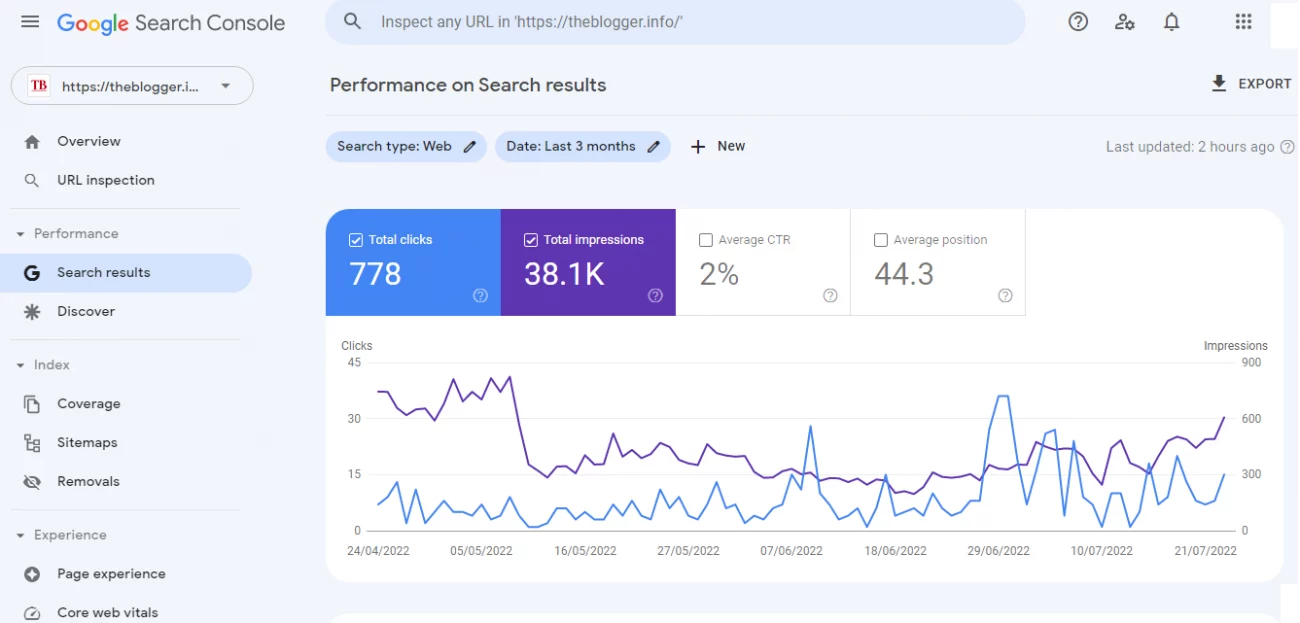
In addition to showing you your best-performing content, CTR indicates the quality of pay-per-click (PPC) advertising. PPC drives traffic to your website by paying search engines for the top spots on search engine results pages (SERPs). So, if the CTR for your Google ad is low, you must review your content, including headers, meta descriptions, and target audience.
What’s a good CTR? Well, that’ll depend on the exact campaign you’re monitoring. For example, a good CTR for email marketing campaigns would be between 2–6%. But even that would depend on your specific industry. Therefore, you should compare your CTR against the industry average and campaign type.
2. Traffic
Web traffic is the number one content marketing metric you should be tracking. It won’t matter how great your content is if no one sees it. Traffic metrics do more than measure how many people visit your web page. They show you which content pieces generate the most traffic and the source of your traffic.
Visitors come to your website from different sources. Knowing this information will help optimize future content marketing strategies. For example, if the majority of registrants for an upcoming virtual event are from social media channels, your content marketing team can dedicate more resources to social channels.
There are five types of website traffic depending on the source:
- Direct traffic comes from visitors who type your URL directly into the web browser. It also comes from sources analytics tools like Google Analytics doesn’t recognize, e.g., PDF documents.
- Referral traffic comes from visitors from other web pages like articles, directories, or affiliate blog posts.
- Social traffic comes from visitors on social media platforms who follow links on social media posts.
- Paid traffic comes from visitors who click social or search engine ads.
- Organic traffic comes from visitors to your site from SERPs.
Google Analytics provides an acquisitions report that shows the numbers of site visitors in a given time period and breaks them down by source. See the image below.

Depending on the goals of your content strategy, each traffic source has its pros and cons. For instance, direct traffic demonstrates brand familiarity but doesn’t provide insight into which marketing campaigns drive traffic.
Paid traffic sources generate targeted leads, but it’s costly. On the other hand, organic search traffic is free, but it takes time and considerable effort to rank among the top five spots.
3. Time Spent on Page
While getting visitors to your website is critical, it is only half the battle. They also have to consume your content. Consumption metrics like the average time spent on a page measure how long visitors spend on a page.
The longer people spend on a page, the more engaging a piece of content is. It’s possible to have high traffic volumes but low content engagement. That just means you’re good at getting people to click your links from the search engine results pages. But, not good enough to keep them on your website.
Take note that content is not always the culprit behind poor time spent on page. Website design could be an issue, for example. Say you have a B2B manufacturing website with a poor layout, structure, and navigation. This will make it harder for users to navigate through your site. As a result, it lowers the time users spend on your website.
In such a scenario, you can retain your content but engage a manufacturer web design professional to ensure your site works correctly to boost your dwell time. This metric relates closely to bounce rate, which we’ll discuss next.
Google Analytics shows you which pages hold users’ attention the longest.
4. Bounce Rate
Bounce rates (not to be confused with exit rates) measure how many people leave your website after viewing the first page. That is, they don’t explore your website beyond the landing page. Generally, a high bounce rate is associated with low interest, but that’s not always the case.
It is typical for single-page blogs to have high bounce rates. Regardless of how long a user spends on the page, there are no other pages to navigate, hence the high bounce rate. However, a multi-page website with high bounce rates is bad.
To calculate your bounce rate, divide the number of one-page visits by the total of website visits, and multiply by 100. You can also view your number on Google Analytics or the analytics software of your choice.
Slow loading speed is a notorious contributor to high bounce rates. According to Google research, pages that take more than three seconds to load increase bounce rates by 32%. More so for mobile users who expect faster loading speeds on mobile devices.
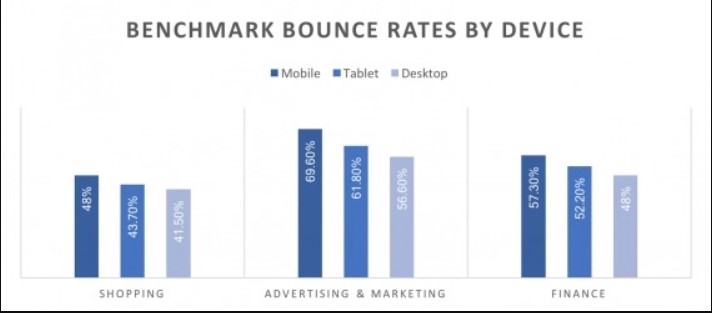
According to CXL’s bounce rate benchmarks, visualized above, the average bounce rate for marketing content on mobile devices is 13% higher than on desktops.
Other contributing factors to high bounce rates are downtime, poor user experience, low-quality content, and blank or error pages.
5. Keyword Rankings on Search Engines
Keyword rankings refer to your website’s position on SERPs for a search. For example, when a call center manager searches ‘VOIP California,’ websites listed for those keywords appear on the results page. See the example below.
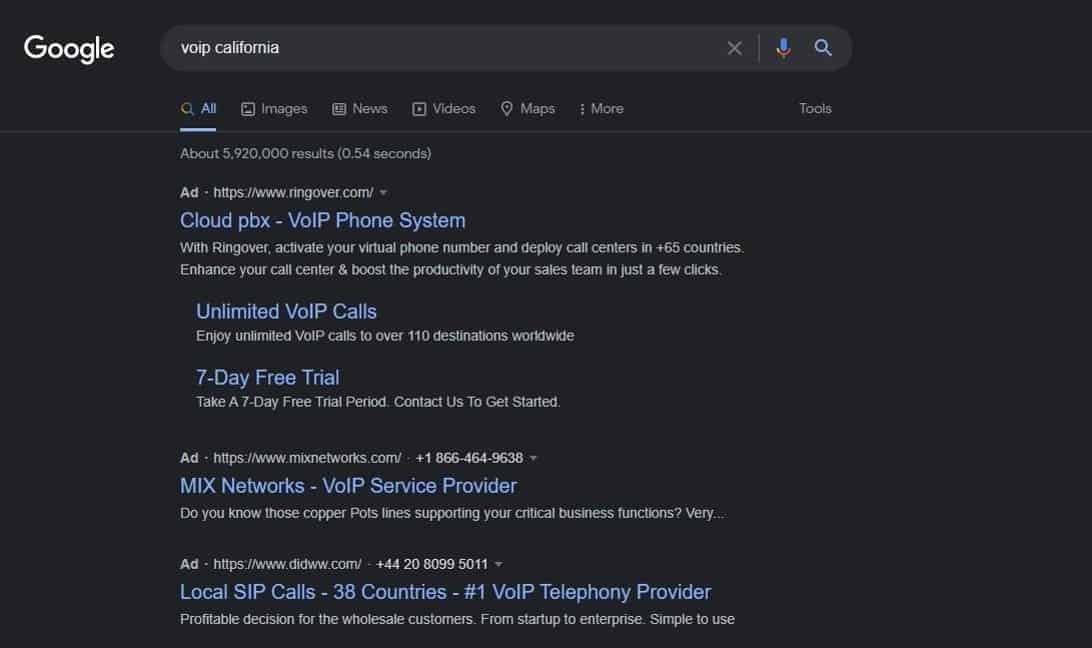
In many cases, paid ads are at the top, followed by Google Maps (for local searches) and regular results. With a high SERP ranking, your domain will gain more visibility and traffic to your website.
There are two ways to achieve SEO visibility: paid ads and SEO. We’ve touched on paid ads; let’s look at SEO.
SEO (search engine optimization) is the process of driving organic traffic (i.e., unpaid traffic) to your content pages from SERPs. One crucial SEO activity is identifying relevant keywords. Keywords research tools like Ahrefs and Google’s Keyword Planner show you trending seed and long-tail keywords.
The trick to improving your SERP ranking is to target these keywords, which you can achieve with the help of a robust content marketing campaign. Let’s say you’re an email marketing SaaS. You’ll need to create effective SaaS content targeting relevant keywords around email marketing.
Each piece of content will need to be optimized for relevant keywords. The keywords will need to be added in the content itself, subheadings, and URL. You’ll need to add the keywords into the content, in some of your headings, and even in the content URL. SEO tools like Surfer and Clearscope can help you with content optimization.
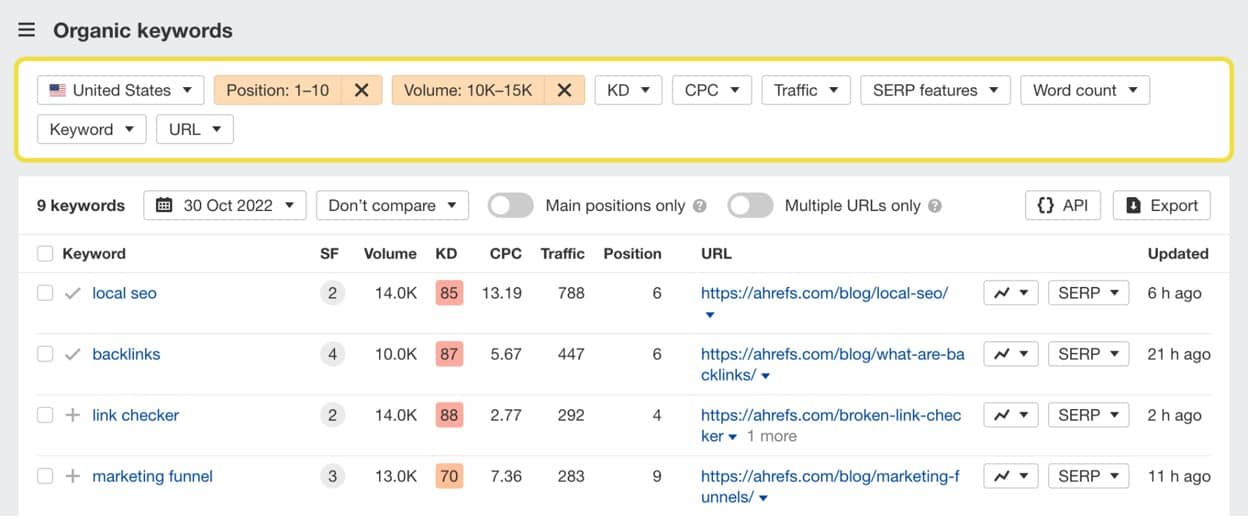
You can use tools like Ahrefs, Rank Tracker, and SEMrush to track your keyword rankings.
6. Number of Backlinks
Backlinks are inbound links connecting one website with another. They help boost brand awareness and domain authority.
Backlinks are critical for SEO because search engines see them as endorsements. Hence, they are a great way to build brand authority on a given topic. The more backlinks you have, the higher your ranking because search engines deem that piece of content as worth sharing.
That said, not all backlinks are equal. Some are more valuable than others. Backlinks from trusted sites are more desirable than websites with low domain authority. For example, a link from Time Magazine is more valuable than one from an up-and-coming blogger.
It’s important to monitor these links because you don’t want any spammy websites linking to your site, as that can damage your reputation and rankings.
You can use Google Search Console to monitor your backlinks. Go to your dashboard, then scroll to “Links.” Click there, and you’ll see how many external links each page has.
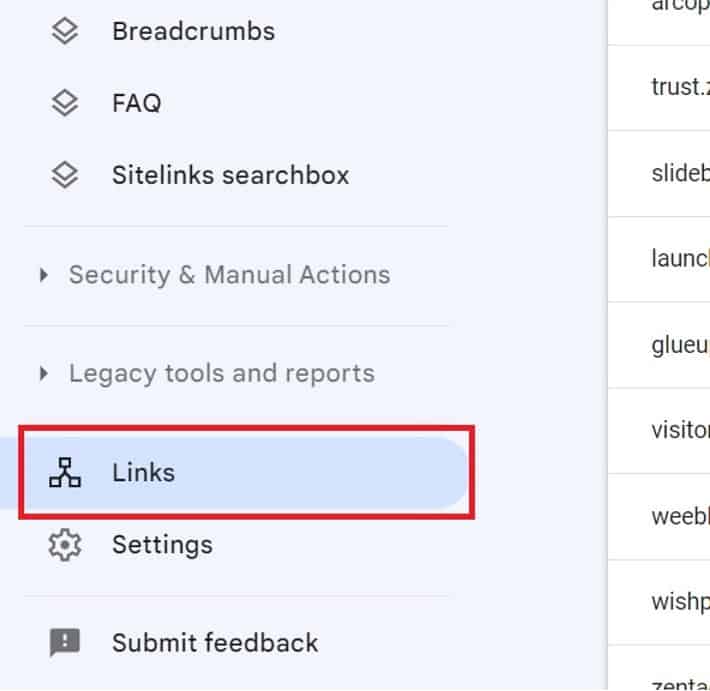
Alternatively, you can use SEO tools like SEMrush, Moz, and Ahrefs to monitor your backlinks.
Monitoring backlinks will inform you of how well your link-building campaigns perform. For example, if you notice you’re attracting more backlinks naturally, it tells you other websites find your content valuable.
But you can also engage in active link-building campaigns. For example, you can do guest posting to increase the number of backlinks you’re getting from reputable websites. This would involve using an email finder to get the contact details of other website editors to kickstart your outreach campaign.
Reach out to the editors, pitching your guest posting topics. In exchange for writing a guest post, you’ll be allowed to include a do-follow backlink going back to your website within the content.
7. Email Opt-In Rate
Email opt-in is a marketing technique whereby content marketers get potential customers to share their email information, usually in exchange for brand content like an ebook or a report. It helps them build an email list where they can now run email marketing campaigns to qualify, nurture, and convert leads.
The best places for high-converting email opt-ins are webpage headers, sidebars, contact forms, and marketing landing pages.

Email opt-in rates measure the percentage of people that sign up for email newsletters or subscriptions. More subscriptions mean your content is reaching more of your target audience.
To calculate your email opt-in rate, divide the number of successful opt-ins by the number of people who visited the opt-in web page.
As this number grows, keep an eye out for unsubscribers and use surveys to understand why they unsubscribe. It will help your content team improve your content and email delivery. Most email marketing software can help you track email list growth and unsubscribe rates.
In Conclusion
Customers today control the access advertisers have to them. That means marketers must develop a content marketing strategy to attract and engage consumers.
Content marketing gives companies qualified leads, shortening sales funnel cycles. How do we know it’s working? Content marketing metrics provide this insight.
Seven of the most important metrics you’ll need to track are the click-through rate, traffic, time spent on a page, and bounce rate. Keyword rankings, the number of backlinks, and the email opt-in rate are also critical.