
cPanel, being a web hosting control panel software has been one of the top providers of graphical and automation tools since its inception in 1996. Despite its age, cPanel hosting is continuously being improved and is widely used by web hosting companies because it allows customers to manage their web hosting accounts without needing deep technical knowledge.
However, the 2019 introduction of cPanel’s new pricing model prompted a reevaluation among web providers. Yet, despite the rising costs and an active exploration of alternatives, cPanel’s expansive feature set continues to draw a loyal customer base.
Reliance on Cloud-Based Hosting
Cloud-based web hosting refers to an architecture that uses a network of virtual servers in the cloud instead of only opting for a single server or a cluster of dedicated servers. This hosting model uses the vast infrastructure of physical servers spread across various locations, interconnected to work as a single, unified system.
The shift towards cloud environments, as seen with cPanel, caters to the growing demand for hosting services capable of adapting to fluctuating resource needs.
The industry is moving towards agile and cost-effective solutions, necessitating a redefining of scalability and performance standards for businesses of all sizes.

Security’s Ever-growing Need in Modern Hosting Architecture
The increased sophistication of cyber threats, paired with a rapid decrease in transistor size, thus increasing hardware performance, demands business hosting solutions that provide full-scale protection.
Attacks like Distributed Denial of Service (DDoS), or Man In The Middle (MiTM) have gotten more accessible for attackers, exposing vulnerabilities in SME to enterprise-level server systems.
Initiatives like the introduction of two-factor authentication and SSL/TLS management by cPanel hosting are an exemplification of the industry’s growing commitment to enhancing security measures.
Containerized and Serverless Hosting
Containerization, using technologies like Docker and Kubernetes, provides isolated environments for running applications, enabling efficient scaling and integration with CI/CD pipelines.
On the other hand, serverless hosting completely abstracts server management away from developers, instead introducing event-driven architecture for more efficient resource use.
Due to an increase in demand for security and adaptability, online applications have gradually started to shift, with 46% of organizations using containers preferring serverless hosting, marking a significant increase from the 31% two years ago.
Integrating AI and Machine Learning into Web Hosting Solutions
One of the most significant impacts of AI and ML in web hosting is the optimization of server performance. The model analyzes vast amounts of incoming data in real time, enabling it to:
- Predict Traffic Spikes
- Identify Potential Bottlenecks
- Allocate Resources Dynamically
The proactivity of this approach makes modern websites faster. In addition, this ability to detect patterns and anomalies has become a great wall against threats like DDoS attacks.
Models are continuously learning and improving by analyzing the incoming data. This allows them to identify and neutralize threats beforehand.
But that is not the extent of AI; it can also automate response to security incidents, reducing the time it takes to mitigate risks, and minimizing potential damage.
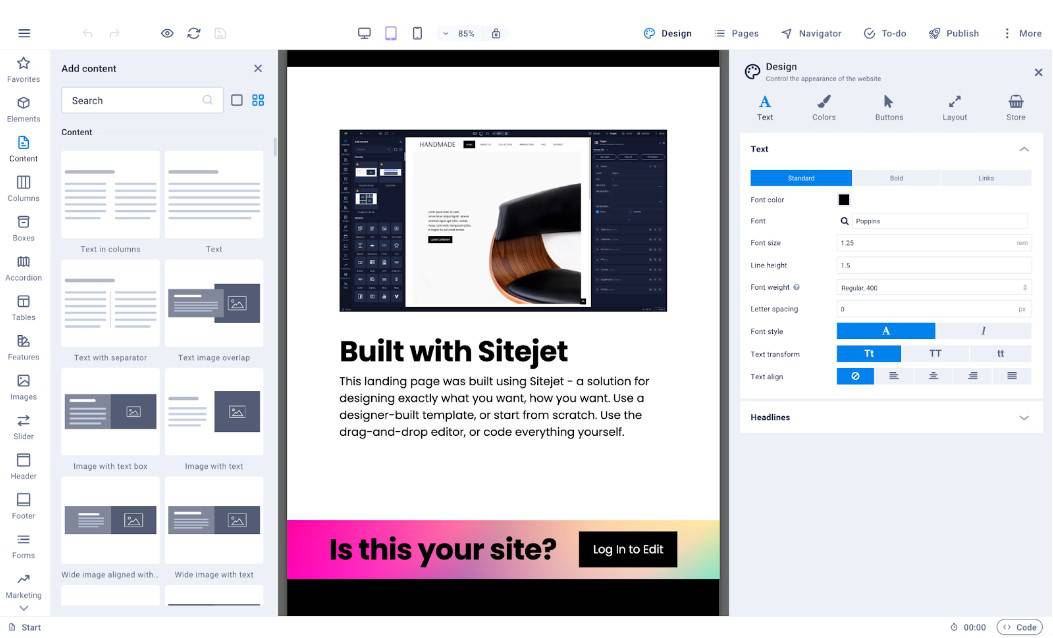
Sitejet Builder & SEO Analysis – cPanel’s New Arsenal
The Sitejet builder is a new tool, integrated into cPanel’s installation, that makes it accessible for anyone to create professional-looking websites. With the rapid proliferation of website creation, this move can be seen as an effort to make website building more accessible for users.
This also streamlines the process, reducing the overall costs, and reducing the entry requirements into cPanel’s ecosystem.
Moreover, Sitejet Builder’s SEO tools are designed to be intuitive, going beyond basic analytics, in an effort to paint a holistic picture of a website’s health.
Conclusion
In conclusion, the hosting landscape is rapidly shifting towards accessibility, and ease of use, blending innovation and adaptation. Since its inception, cPanel has continued to evolve to meet the growing demands of the market, with tools like Sitejet Builder and an overall emphasis on user design.
While cPanel has not fully integrated the potential benefits of AI into its architecture, it can still be seen as the most logical evolution path for cPanel hosting going forward. With the increase in demand for shared serverless hosting, cPanel’s robust set of features has seen another rise in popularity.