Typically, landing pages can be created for several purposes. Some of these include promoting new products or special offers and announcing events or webinars.
However, it’s not enough to create a landing page. The real results only start to roll in when you get prospects and target customers to see what you’re offering. That’s why effective promotion is key.
Today, you’ll learn nine powerful tips to promote your landing page effectively and supercharge your online success. Ready? Let’s dive in!
1. Send out targeted email campaigns
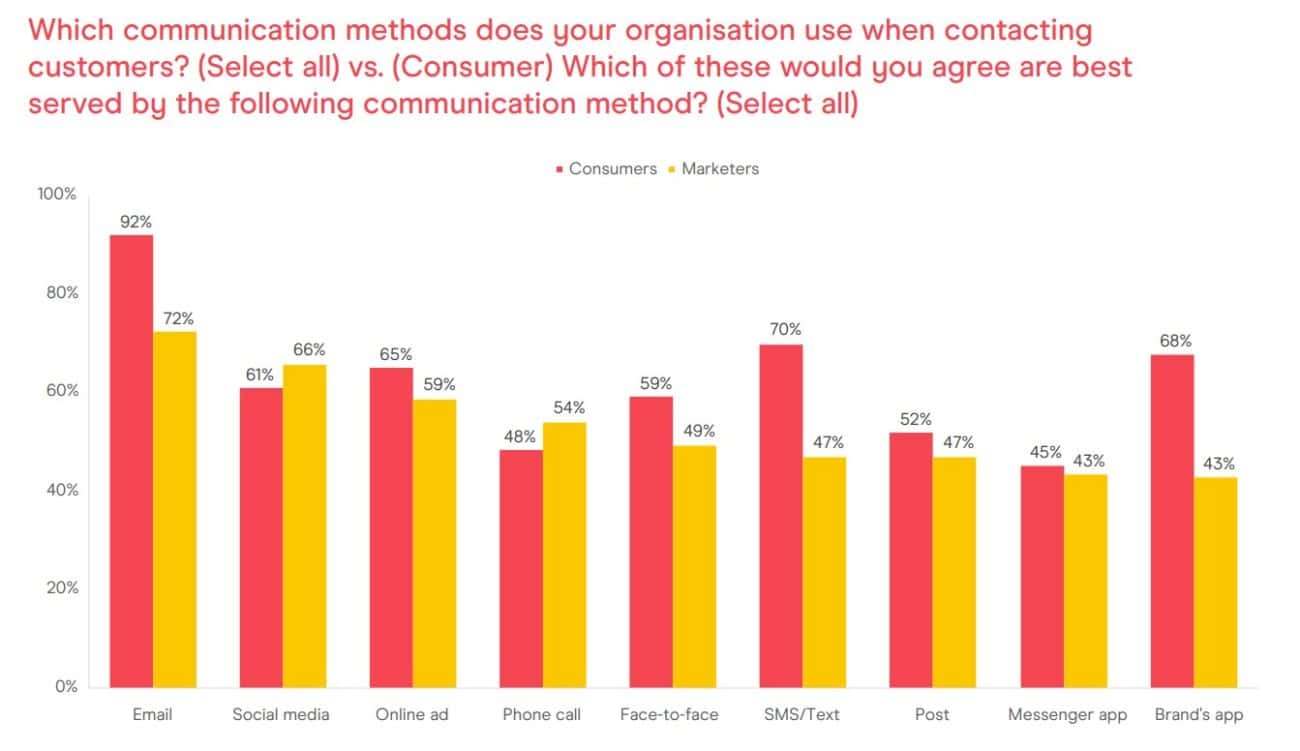
Targeted email campaigns allow you to reach specific groups of people with tailored messages. This makes them quite useful when you want to promote a landing page. In fact, 72% of marketers prefer to reach customers through email.
The first step to creating a targeted email to promote your landing pages is to carefully determine which of your subscribers will be interested in what you’re offering. That’s why you need a segmented email list.
You can look at your existing customer database to find out the relevant information about them. Look out for details like customer preferences, buying patterns, or purchase history. Send specific surveys to gather enough information about your customers, too. If you find some email IDs have changed or are missing you can use an email finder tool to update the email addresses in your list.
Then use all this data to create a decent email newsletter that matches your branding and will appeal to them. You might have to create more than one newsletter, depending on the segments you come up with.
Remember to use straightforward messaging in your emails. Headings should be concise and grab attention. Here’s an example from Kahoot’s email promoting its landing page for a 25% discount:

You should know how to craft good email subject lines as well. If you’re running out of subject line ideas, generative AI can help. There may be generative AI risks like “AI hallucinations” but there are easy solutions to these. You can use the tool to quickly generate engaging subject line ideas then put your own twist to them.
In your email body, you should explain the value of your landing page and tell the customer what they’ll find by clicking on it. For instance, is the landing page to promote a new product? Don’t hesitate to create a form of anticipation in your campaign email by highlighting the product’s benefits.
Your campaigns should also be personalized. A general rule is to use the recipient’s name and write like you’re talking to them directly. Include a clear CTA button that will lead to your landing page, too.
As a final tip, before you email verify the addresses you send your messages to. You want your emails to reach your intended recipients.
Social platforms are powerful tools for creating buzz and hype around your brand. Marketing strategies for restaurants, eCommerce businesses, manufacturing, and even SaaS brands typically emphasize an active social media presence. You should do the same when you’re promoting your landing page.
Focus on sharing your link on social media platforms where you notice that your target customer base is most active. You want to be strategic about how you share the link.
For instance, you may place the link to your landing page on your social media profile. Do this on a social network like Instagram that doesn’t allow clickable links in a regular post update. Here’s an example from Sticker Mule’s Instagram profile:
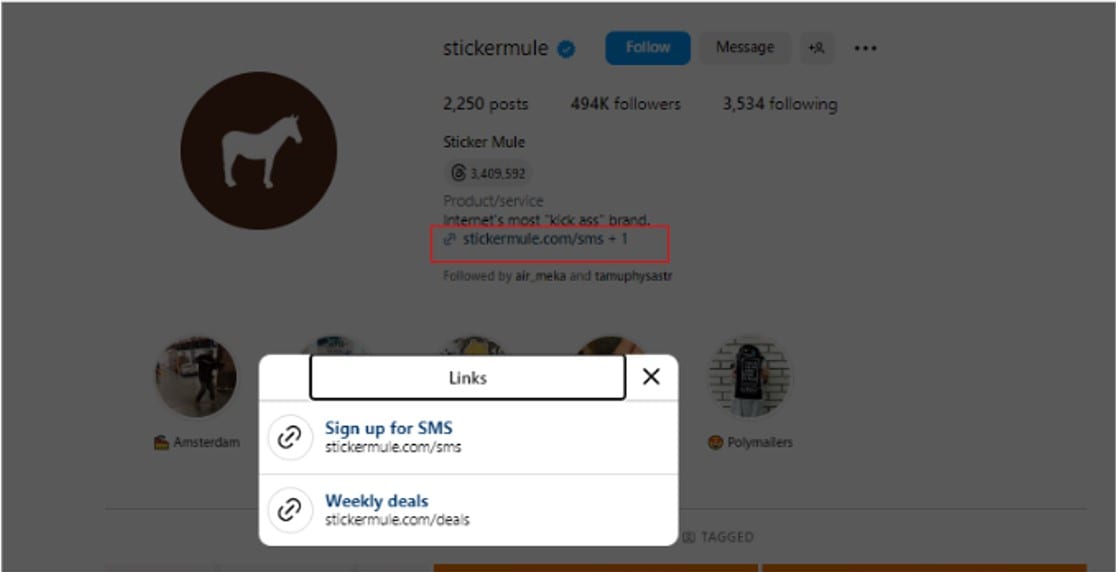
Draw attention to the link by sharing social media posts and prompting active users to click the link in your bio. You can even pin these posts on your Instagram profile for the duration of your landing page promotion.
For other social networks like Twitter (X), LinkedIn, YouTube, or TikTok, you should focus on creating posts with high-quality photos or videos.

Your posts should tell customers about what you’re trying to promote on the landing page and prompt them to click on the link— just like Sticker Mule’s Tweet above. Your call to action should be clear and straightforward.
3. Utilize PPC advertising for search engines or websites
With pay-per-click advertising, you can promote a landing page through search engines like Google or Bing. Promoted ads are usually the first things a user sees when they search for specific terms on search engines. For instance, if you type in “gift card maker” on Google, you’ll find some sponsored search ads like the ones below in the search results:
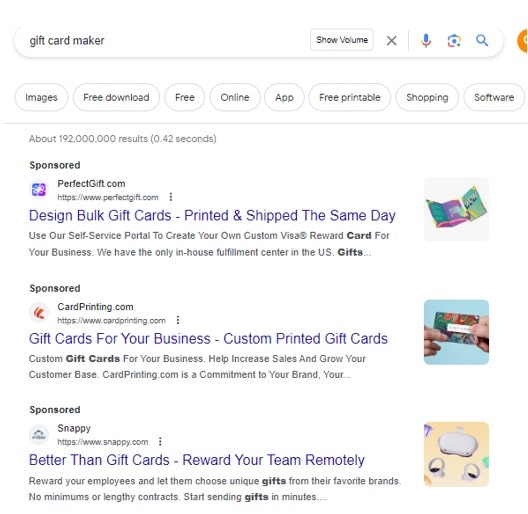
To create these types of effective PPC ads, use keywords that directly relate to your landing page’s content. We’ll discuss how to do keyword research in the next section.
Use the keywords to craft concise ad copy that matches what your target customers are searching for. Remember that the title and meta description should be clear and actionable. See the example in the sponsored ads above.
Don’t forget to consider ad position especially if the ads will be displayed on websites connected to Google Adsense. In this case, some recommendations include positions above the fold (header banner), on the sidebar, or within the content.
4. Optimize your landing page for relevant keywords
Keyword optimization ensures that your landing page aligns with what users are searching for. When your content matches their intent, visitors are more likely to engage with your page and take the desired action—such as making a purchase or signing up for a webinar.
Start by conducting keyword research to identify the terms and phrases that your target audience is using to search for products or information related to your landing page. Tools like Google Keyword Planner, Semrush, and Ahrefs will allow you to get data such as the keyword competition or search volume. Here’s an example from Google Keyword Planner:
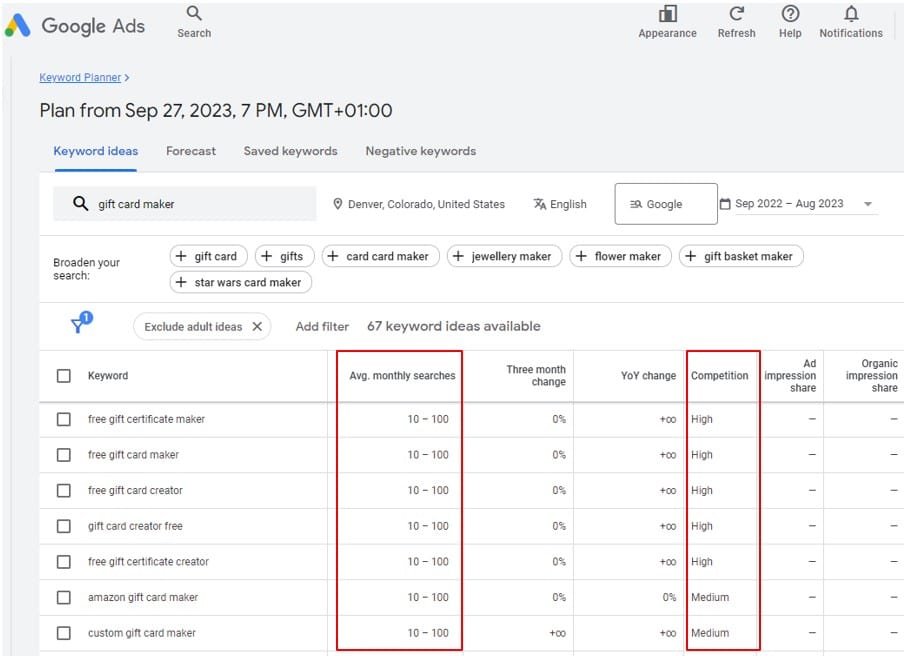
Target keywords with medium or low competition but have a high search volume. These keywords give you the best chance of ranking well in search engine results pages (SERPs) and driving traffic to landing pages.
Once you discover the relevant keywords include the main keyword in the page’s title and meta description. Use related keywords in headings (H1, H2, H3, etc.) to emphasize their importance.
If your landing page includes images or videos, use descriptive alt tags that contain relevant keywords to make your images searchable. Provide accurate and keyword-rich captions or transcripts to enhance their searchability. Don’t forget to optimize your landing page URL. Register a domain name that includes your primary keyword as this can also give your page a good SEO boost.
Of course, focus on creating high-quality, informative content that naturally incorporates your keywords on your landing page.
5. Create blog posts with videos
Write blog posts or articles that provide valuable information related to the topic of your landing page. Offer practical tips, insights, and solutions that address the needs and interests of your target audience. Then internally link your blog posts to your landing page.
For instance, Timify has a blog post on its site that includes an internal link to its registration landing page:
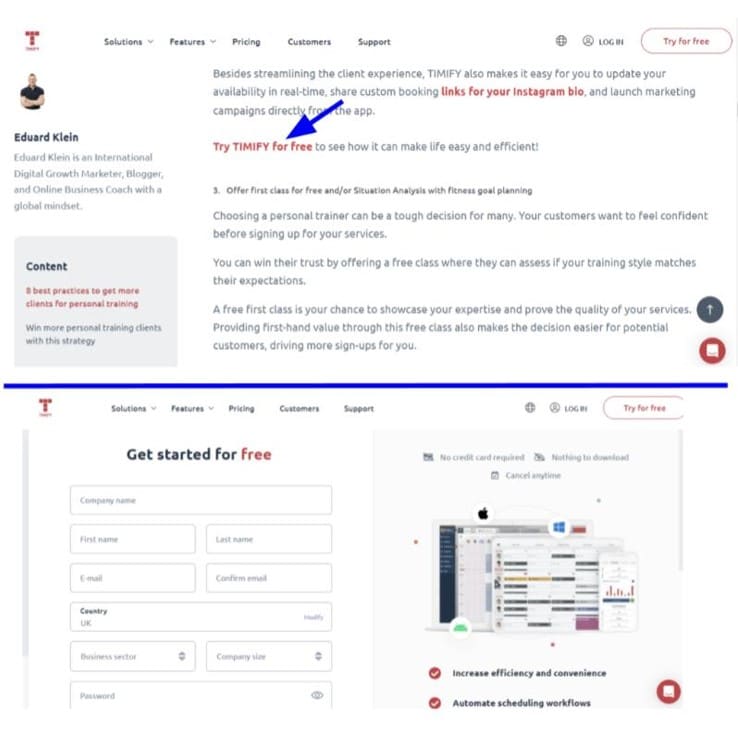
Don’t forget to incorporate relevant keywords throughout your blog posts to improve their search engine visibility and boost organic traffic. You can use AI to aid your writing efforts. The tool won’t just help fast-track your content creation. Since there’s a role to play for AI in SEO as well, you can ensure your resulting content will also help you rank in SERPs.
Videos are quite helpful when you want to convey information compellingly. So, why not incorporate them into these blog posts to entice readers to click through to the landing page? You can include video testimonials or reviews from satisfied customers who have used your products or services. Doing this is one way to build trust and motivate your prospective customers.
6. Partner with influencers
Influencers are social media users with a large following. Macro influencers have between 100,000 and one million followers according to CMSWire, while micro influencers have between 1,000 to 100,000 followers. Micro-influencers are the ones you want to work with. They are typically easier to reach and have a niche-focused audience.
Follower count is not the only thing to look out for when you want to partner with an influencer to promote your landing page. Before reaching out to an influencer, find out how the type of content they share relates to your brand. Is there a way to naturally fit your brand in the context of this influencer’s content?
For instance, in the YouTube post below, Kelly Gooch a beauty influencer does a review on some of Sephora’s makeup products and also includes links to various landing pages on Sephora’s site:
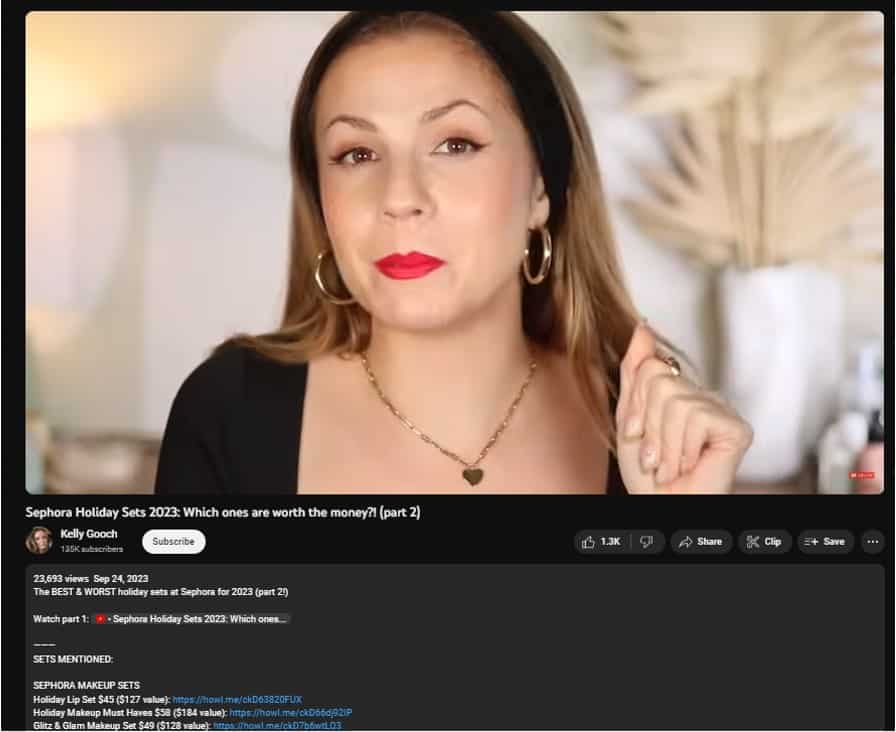
You also want to ensure that the influencer has a significant level of engagement on their platform.
Influencers can help you create interesting content that may be more relatable to your target audience. Partnering with influencers will also help you gain trust since 82% of consumers are likely to follow recommendations from an influencer.

Also, when reaching out to influencers, be clear about what you want them to do and how you want them to promote your landing page. Should they do an unboxing video, a brand review, or take a picture of them using your products?
Offer them something of value too– say, a special product package, a unique discount code, or a commission for the leads they generate to your landing page. Track these leads through a unique referral code.
Targeted social media ads can help you promote a landing page. These ads allow you to reach a specific audience that’s more likely to be interested in your brand and its offerings. Here’s an example of a targeted Facebook Ad by Wayfair:
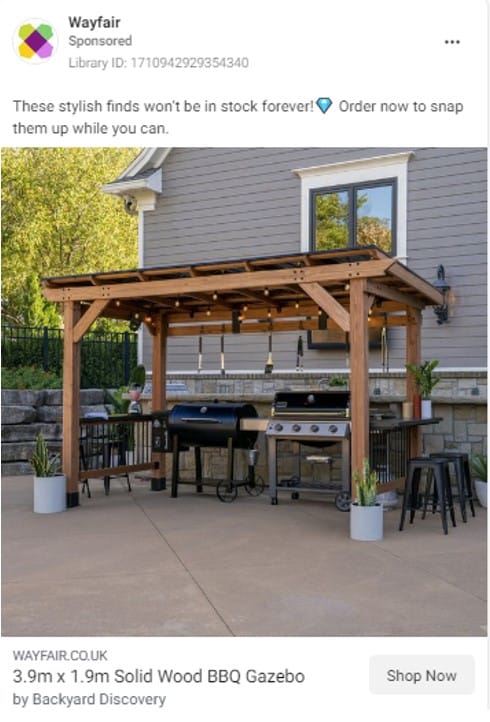
Targeted ads on social channels use external data available on platforms like Instagram, TikTok, YouTube, Twitter (X), or Facebook. The data is derived from the user’s activities on these social networks, for instance, posts they engaged with or previous ads they clicked on.
When creating social media ads, narrow down your audience based on factors like demographics (age, gender, location), interests, or behaviors, see the example below. This precision ensures that your ad is shown to people who are more likely to engage with your landing page.

You can also create custom audiences on platforms like Facebook which have pixels– a pixel is a piece of code that you add to your website to track visitors and collect data about their actions. With this, you can target users who have previously visited your website or engaged with your ad in the past.
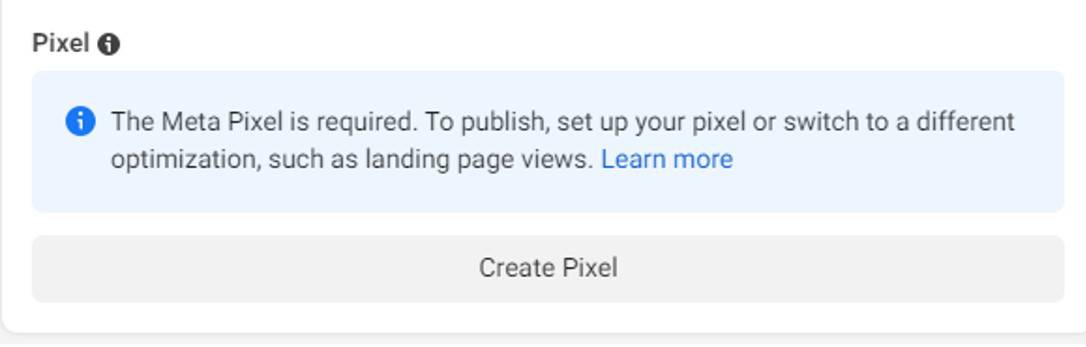
Overall, social media ads allow you to engage new prospects and re-engage existing customers, and have them visit your landing page.
8. Include QR codes in printed materials
So far, we have focused on digitally promoting your landing page. Now, it’s time to take things offline. Adding QR codes specifically to printed materials like brochures, flyers, product packaging is one way to fuse your online and offline marketing efforts. It’ll help you reach prospects who may not have discovered your brand over the internet.
When placed strategically on printed materials, QR codes prompt leads to take immediate action, whether it’s scanning to access exclusive content, promotions, or educational resources.
When using QR codes, double-check that the QR code links to the correct landing page. Make sure that the QR code is adequately sized to be easily scanned. If it’s too small, scanning may be challenging, leading to frustration for users. Finally, you can also accompany the QR code with a clear call to action that prompts users to scan the code.
9. Distribute press releases
Press releases are an effective way to generate publicity and raise awareness about your landing page or the content it offers. A well-crafted press release can help you get the attention of journalists, bloggers, and news outlets. When distributed through reputable PR services and picked up by news organizations, press releases can enhance your brand’s credibility and authority.
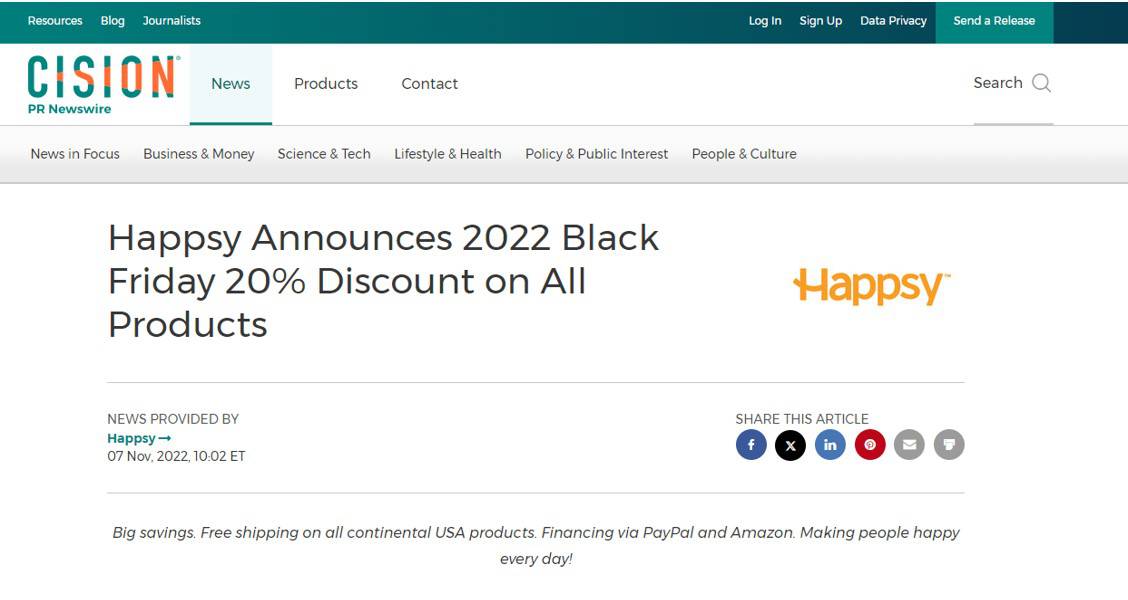
Craft an attention-grabbing press release that focuses on the most important aspect of your announcement. Use headlines and subheadlines that are clear and straight to the point. See this example from Happsy:
You can also include quotes from relevant leaders and customers in your company to add credibility and human interest to the story.Of course, don’t forget to include a link to your landing page.
Overall, press releases can help attract targeted traffic to your landing page by reaching an audience interested in your brand.
In Closing
Promoting your landing page effectively requires a well-rounded approach that taps into both online and offline channels. Today, we explored nine dynamic tips to promote a landing page.
Use targeted email campaigns, social networks, and PPC advertising for websites and search engines to circulate your landing page link. Optimize your landing page with relevant keywords and create helpful content in the form of blog posts and videos to engage your audience.
Partner with relevant influencers and invest in social media ads to target potential conversions. Take things offline by adding QR codes to your printed materials. And, distribute press releases through media outlets, journalists, or popular blogs.
By putting these strategies to work, you can create a productive promotion campaign for your landing page. Good luck!