Five Reasons Why 3D Design Is A Cornerstone of Online Business

As a rule, every business owner has a product that he or she is proud of and an online platform to sell it. It would seem that what else is required to run a profitable business? There is some truth in this, but it is not complete.
After the Covid-19 outbreak in 2020, customers made a sharp turn towards virtual shopping, which has now become something between a habit and a default option. This trend is relevant today, with 3d visualization for ecommerce as a robust tool for customer attraction.
How exactly can this solution be implemented? We will be happy to share our ideas.
Competition vs Business
While e-commerce is growing rapidly and is not going to slow down, ruthless competition is also lurking. There are currently an estimated 12 to 24 million online stores globally.
It is no longer enough to simply create a digital platform to sell products. Now, it is time to move to the next level of development and invest resources in the wow factor to help attract potential customers.
3D Solutions for Business
3D design is a powerful solution. Predominantly, it is a tool that opens the doors of possibilities, from an attractive 3D logo that will welcome users on the main page of the site to the presentation of the product in all its glory.
With the help of 3D, you can create photorealistic images with a 360-degree view. The buyer can see the product itself in high detail, its color, print, or texture.
3D modeling, as part of an online store, helps to stay one step ahead of your competitors. The audience may already be used to traditional 2D images of products, and here is a chance to offer a fresh approach that will focus customers’ attention on the brand and its product.
Ultimately, 3D design opens up a new level of possibilities for product presentation according to the rule: “Don’t tell, but show.”
Changes are Ahead
Taking photos and videos of a physical product is a painstaking process that requires perfect lighting, angle, and subsequent color correction or retouching. But what if the business owner updates their product or simply makes some corrections? There’s a chance that you’ll have to go through it all over again.
3D visualization, on the other hand, is more flexible to various modifications. Imagine that you need to move the light source in a 3D image. For sure, a good designer will be able to adjust everything according to the customer’s wishes.
As for photos, things are not so simple. You’ll have to reshoot the product to capture natural lighting or turn to Photoshop. But there’s also a caveat here—there’s no guarantee that you’ll achieve the desired realism.
Customer Retention on the Rise
3D design creates a user experience that immerses customers in the product. Instead of just static two-dimensional images or plain text, the audience is caught up in a wave of interactivity that they won’t want to leave.
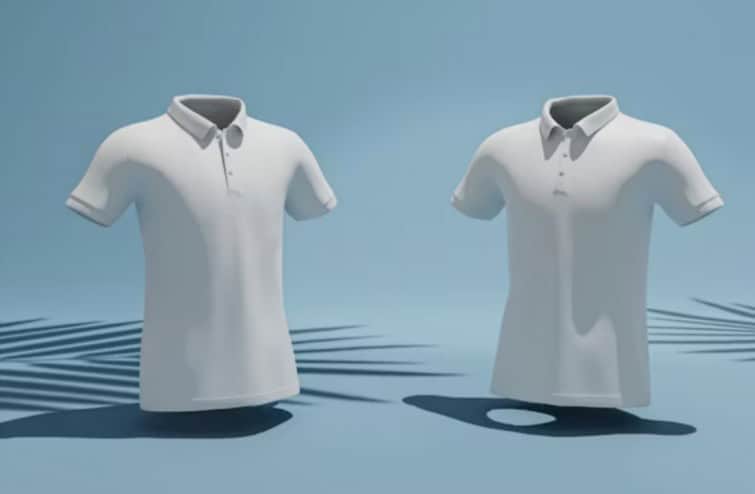
For example, users can rotate, zoom in or out of a product image, or play with its color, texture, size, etc. This is a mind-blowing level of personalization that brings a site to life and can increase customer engagement by around 66 percent.
We see the world in 3D, and the Internet still offers us flat images. Thus, when we browse a site, and our eye catches a three-dimensional visual with beautiful texture and lighting that is as close to natural as possible, it automatically catches our attention.
3D Minimizing Product Returns
You’ll probably agree that when people shop on the Internet, they’re essentially playing the lottery about what they’ll get when they receive it. Shoppers can’t 100 percent imagine the size or appearance of an item in a specific environment. What do they do when an order doesn’t meet their expectations? They return it.
3D helps solve this challenge, potentially reducing returns by 35 percent. With 3D visualization, users feel more in control when shopping online because they can see the product from all angles.

3D design is also a powerful tool to convey the essence of a physical product through the gadget screen as close to reality as possible, since 2D images are not capable of doing so. The latter is a wonderful and familiar choice, but with 3D modeling, we combine the magic of the digital and the physical world.
Final Thoughts
Thanks to greater confidence in the product and its value, which 3D helps to convey to buyers, sales can increase by up to 40 percent. The fact that three-dimensional design has not yet become a mass trend and has not entered the design pipeline makes it profitable for business.
As online shopping expectations are set to rise, so is competition. 3D can help you keep up with and exceed demand, stay ahead of the game, and set a new standard for online customer engagement.