How to Choose the Best Email Marketing Software for Your Business
Email marketing is one of the most important channels for engaging your target audience and driving business success.
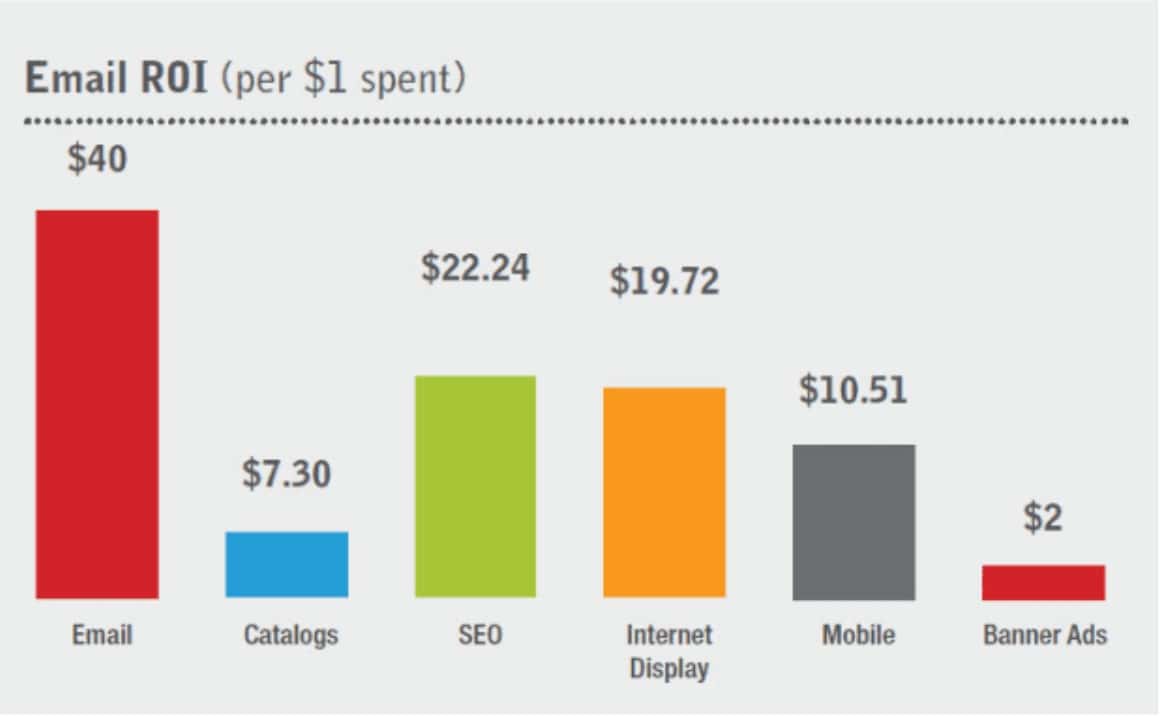
As you can see, email has the highest return on investment compared to other marketing channels, like search engine optimization and catalogs.
However, the success of your campaigns will still hugely depend on the email marketing software you choose. You see, different software solutions have different features, affecting how you run your marketing campaigns.
Moreover, these tools are priced differently. The cost of your email marketing tool will also affect your email marketing ROI. You calculate your ROI by subtracting what you spent from what you gained, after all.
So, out of the hundreds of email marketing platforms, how do you pick one that can meet your unique needs and ensure the success of your digital marketing? Here is how to choose email marketing software for your business:
1. Identify Your Specific Needs and Goals
You need to first ask yourself these two questions when looking for a robust email marketing platform for your business.
What specific needs do I want this software to meet?
What do I hope to achieve from it?
Answering these questions will help you determine what features are a must-have for your ideal email newsletter software. We’ll talk more about this later.
So, do you hope to run complex drip campaigns, simple promotional emails, or transactional notifications?
Is your email marketing goal to nurture relationships, generate leads, increase the conversion rate or all those combined?
Make an exhaustive list of your needs and goals so you can refer to it later.
2. Check for Features Required
At this stage, you just need to specify the features you need in your email marketing tool based on your identified needs and goals. So, if your list says you need to run email sequences to nurture customer relationships, for example, you’ll need advanced automation features that also allow you to send emails in bulk.
Once you have a list of email marketing features you require, just look for that powerful tool that has them.
Those business-specific features aside, you should know that, regardless of what your email marketing priorities are, there are features that are generally considered a must-have in the email marketing space. Consider looking for a valuable tool that also allows:
- List Segmentation: Lets you divide mailing lists into customer segments based on common characteristics. With segmentation features, you can send personalized emails based on user attributes and behaviors to boost customer engagement.
- A/B Testing: Allows you to test variations of an email to a portion of your email clients before you actually run your campaign. Email testing will help you determine the messaging that’s likely to perform well
- Detailed Analytics: Gives you email data such as open and click-through rates. Advanced analytics supports data-driven optimization and continuous improvement of your email campaign performances. The data can also inform your entire marketing campaign, business decisions, and even the public relations campaigns you’re running alongside your PR service providers.
You’ll also need to choose email marketing providers that integrate with your existing tech stack. Besides breaking down data silos, seamless integrations will make life easier for your email marketing team because they won’t have to jump between multiple platforms.
3. Consider Ease of Use
By now, you should have a list of the email tools with the wide range of features you need. The next thing is to evaluate these email marketing software options to determine which is the easiest to use.
So, here are the things you should look for:
- User-Friendly Interface: Choose an email platform with a simple and intuitive interface that makes core functions feel effortless. An overly cluttered or confusing layout will only slow you down.
- Drag-and-Drop Email Builder: A user-friendly platform for email marketing usually has a drag-and-drop editor. This helps you design beautiful, professional emails even without coding skills.
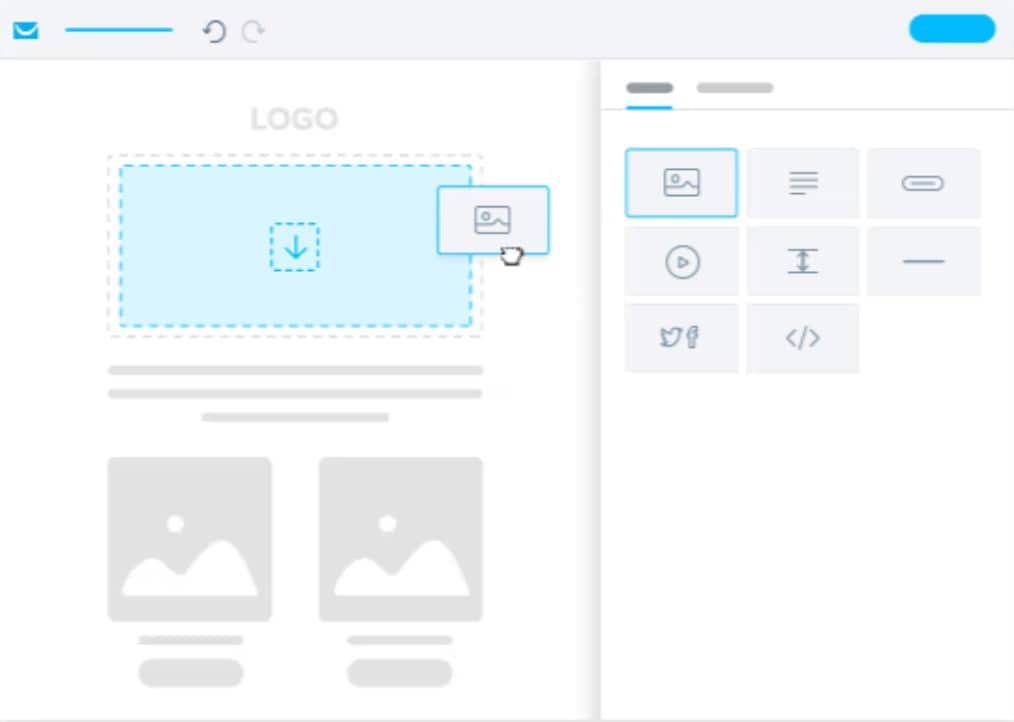
With this, you can add images, text blocks, buttons, and other elements exactly where you want them just by clicking and dragging. This should save you hours in designing your email marketing campaigns.
- AI Tools: AI tools like an AI email generator or AI assistant can help you easily craft and refine compelling email content at scale.
- Email Marketing Templates: High-quality email templates are every marketer’s best friend. These pre-designed layouts (aligned with best practices) can make it easy for you to create campaigns and get them running quickly. The best platforms provide a library with responsive email templates tailored to different industries. An easy-to-use software solution will go further to offer customizable email templates you can align with your brand identity.
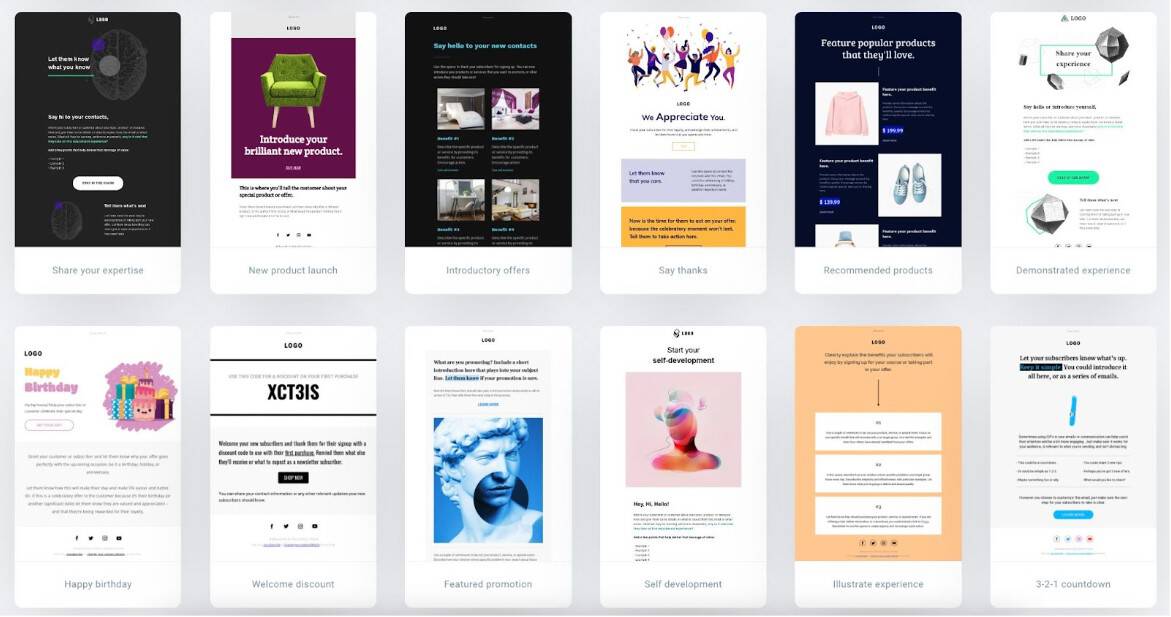
Examples of templates you’ll find in email marketing tools. Source: GetResponse
Even the most easy-to-use email marketing solutions tend to experience technical issues. When that happens, you’ll need a customer support team by your side to resolve them.
One of the best ways to evaluate a company’s customer support is by reviewing customer feedback on platforms like G2 and Capterra. Check what other users have to say. Is the customer support team responsive? Do they respond quickly? A staggering 90% of customers rate as “important” the immediate response of a business when they have a customer support issue. Also, does the platform have knowledgeable support staff?
Documentation, training resources, and discussion forums are also essential. These can make all the difference in solving problems.
4. Understand Your Budget Constraints and Pricing
The best email marketing software shouldn’t cost more than your allotted budget for it. But when deciding which is the most affordable option, as a business owner, you shouldn’t just consider the upfront cost of buying the tool. You’ll have to consider your future expenses associated with scaling your business as well.
To understand this better, let’s look at the different pricing models of email marketing software solutions:
- Per Subscriber Model: You are charged a monthly or yearly fee based on the number of email subscribers in your contact database.
- Volume-Based Models: Your monthly/annual fees are calculated based on the number of emails sent. The more emails sent each month, the higher the monthly cost.
- Freemium Model: These platforms offer a free basic email marketing plan with the option to upgrade to paid plans with additional features.
To determine the most cost-effective tool for you, you’d probably assess your email list or estimated monthly email volume and calculate the cost per email or subscriber. Then you’d probably compare and contrast the numbers you get for each tool. The cheapest tool should be the best email marketing service provider to buy, right?
Well, that’s where you could be wrong.
If you consider your future growth plans, the most “expensive” platform now could still be the best option for you in the long run. This would be the case if the cost of adding powerful features to this “expensive” tool is lower than that of adding features to the “cheapest” one now. So, five years from now, when your business is bigger, you could end up spending less if you go for the current “expensive” email marketing tool.
So, here’s another important tip on how to choose email marketing software for your business: When selecting the best software for your budget, consider your future objectives and growth plans as well. You wouldn’t want to buy a tool that will end up costing you a lot of money in the long run.
In Conclusion
Email is a powerful tool for businesses and one of the best marketing channels today. It has an impressive ROI and makes it possible to personalize customer interactions at scale. Plus, email is an owned media, unlike other channels like social media and search, where algorithms change all the time.
This article showed you how to choose email marketing software for your campaigns. You learned four tips you should follow. Identify the specific needs and goals of your email marketing efforts, check key features and deep integrations, look at ease of use, and, finally, consider your budget.
Now go and pick the perfect solution for your business.
Author bio:
Meet Michal Leszczynski, Head of Content Marketing and Partnerships at GetResponse. With 10+ years of experience, Michal is a seasoned expert in all things online marketing. He’s a prolific writer, skilled webinar host, and engaging public speaker. Outside of business hours, Michal shares his wealth of knowledge as an Email Marketing lecturer at Kozminski University in Warsaw. You can reach out and connect with Michal on LinkedIn.