Video chat apps are very diverse, so you can apply various ideas to build one. It becomes very easy when applying AI services which we discuss here.
People use video chat apps for communication and information exchange in various contexts. As you’ll see, there is a high demand for such apps.
So, video chat app development becomes increasingly popular, as there’s plenty of space for various ideas and advancements. However, what can you use to make the development easy and efficient to test several app hypotheses before launching a full-scale version?
Artificial intelligence is the answer: use various AI services to speed up development and make it much more convenient. Here, we’ll estimate the video chat app market, its value for you, and which types of such apps are in use.
After that, we’ll discuss how exactly AI technologies influence app development and show you several AI services that may help you with it.
The Current Situation
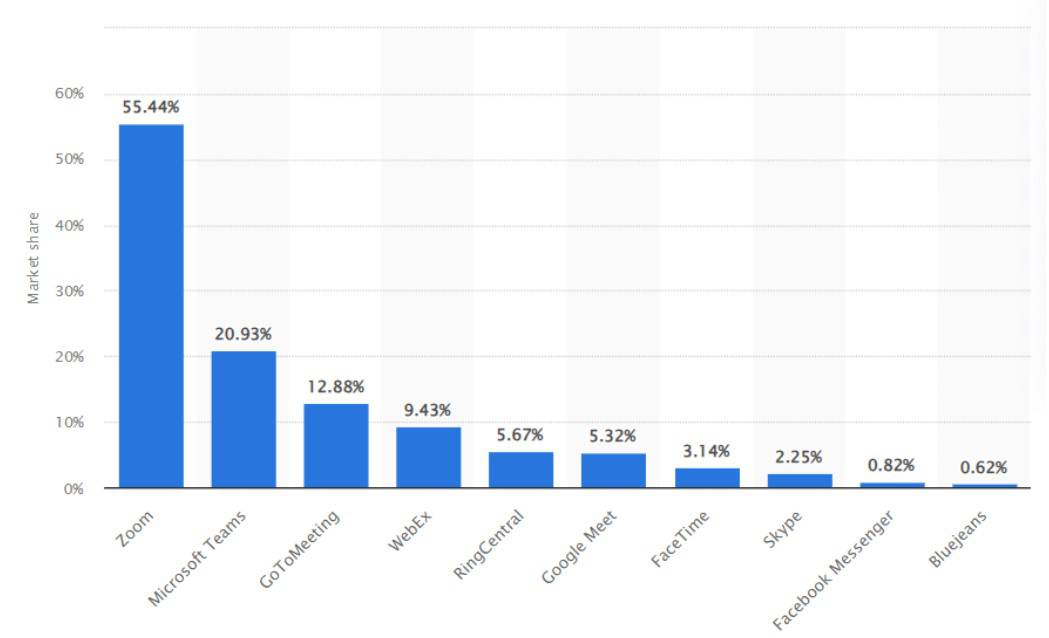
See the statistics below. You can see that Zoom currently dominates the market, and Microsoft Teams takes a large part of the rest.
Source: Statista.com
Let’s discover the video chat apps market. Currently, it has about $7.5 billion in size, which is quite high for such an industry that provides video chats between people. Below, you can see the size of its North American part: it has more than $2.7 billion.
The predicted growth is considerable, despite, as you can see, the market is quite saturated and large players are already here.

Source: Fortune Business Insights
While it may seem that all ways are already taken, video chat app’s diversity opens plenty of possibilities to enter the market. As you’ll see, AI services make development easier and quicker.
So you can start with some creative ideas about how to facilitate video communication, test it quickly, and see how you can make your product useful and profitable.
Video chat apps’ destinations are very different, so you have a lot of ideas to work with. People use them for various purposes, from personal communications to work meetings, self-demonstrations, and education. To evaluate the range of these apps, let’s explore their types.
Types
All these types may be combined, and they are often embedded in other social apps, such as messengers or social media. We’ll explore each of them, and you may easily find or even remember some examples of them.
- Personal call apps are designed for communication between individuals. While they may also allow creating group calls, their focus is peer-to-peer communication and calls.
- Group video chat apps enable multiple participants to join a video call simultaneously. They are ideal for group meetings, virtual hangouts, and remote team collaborations, allowing people to connect and interact in real time.
- Business video conferencing apps are similar to the previous type, but they are specifically designed for corporate environments. Thus, they offer advanced features for remote work management: screen sharing, document collaboration, virtual whiteboards, and meeting scheduling.
- Webinar platforms are employed for hosting and attending webinars, presentations, and online courses. They utilize the virtual room interface, where you may enter either as a listener to listen to the speaker and write something in live chat or as a speaker to share your screen and speak to the audience.
See below an example of such a platform intended for education with additional features.

Source: Dribbble
- Live streaming apps enable users to broadcast live video to an audience, be it their own camera or screen sharing. Viewers can interact through comments and chat features in the virtual room environment, similar to the webinar platform. They also are used to connect with the audience, and their customers usually are bloggers or streamers.
AI Technologies for App Development
Before moving to specific examples and how you may utilize them, let’s overview three AI technologies that are primarily deployed here.
- Natural Language Processing (NLP) enables apps to understand and process human language, so it’s the main technology to convert language into code.
- Predictive analytics algorithms analyze bunches of data to make predictions or recommendations: so they can edit your code and add new ones based on the existing ones.
- Recommendation systems use AI algorithms to suggest relevant content or products to users, being helpful as coding assistants.
Services Examples
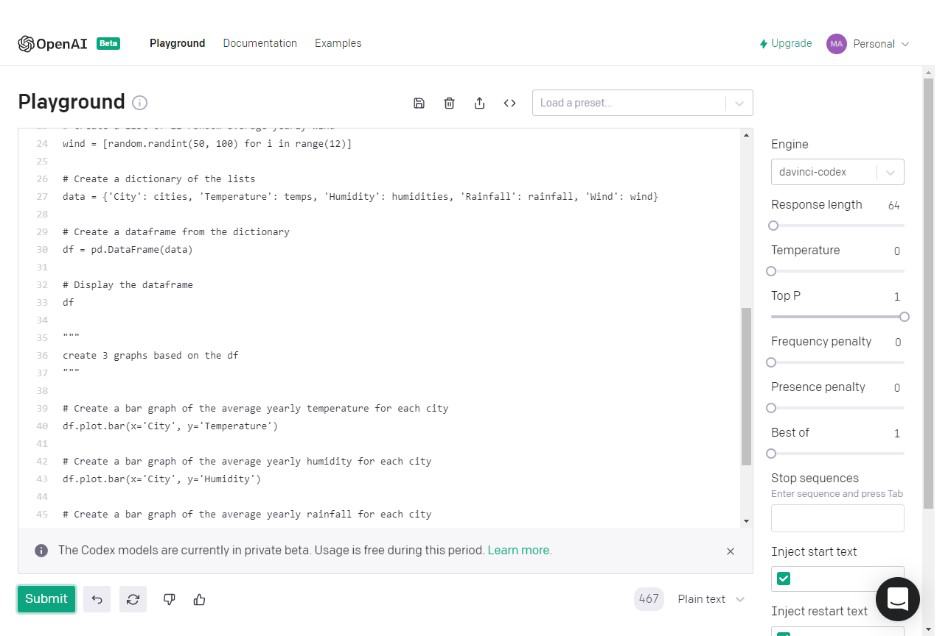
You may utilize specific apps and platforms to fulfill your development goals. Let’s review them, so you’ll be able to select one or several of them. See below an interface of Codex, one of such applications which generates code based on the NLP.
Source: A Medium blog
- OpenAI: Codex is a tool from ChatGPT creators designed specifically to convert natural language into code, which interface you’ve already seen. You can upload your requests using English and obtain a code to fulfill them, after which you’ll customize the code if necessary.
- DeepCode enhances development by scanning your code and providing tips for writing, and proposing to include already generated code when possible.
- AskCodi generates code based on your request and may also turn the algorithm written in English into the programming language algorithm. It integrates with Visual Studio Code and JetBrains IDEs, which are the most popular ones.
- Copilot, powered by GitHub, is a powerful tool that helps during programming. It can generate small chunks of code by request, but programmers usually use it to enhance their productivity during manual code writing.
- IntelliCode, embedded in Microsoft’s Visual Studio Code, is an intelligent code advisor, greatly speeding the development process.
- CodeWP is an AI code generator for WordPress websites and applications. It generates code on PHP and gives advice during programming.
These AI services enable you to integrate intelligent features into your development process. Some of them may generate code chunks based on your request, paste code directly into your IDE, edit and check your already-written code, or provide valuable tips. Many of these apps combine such features.
So, let’s figure out a development algorithm that you’ll utilize for your app building.
Video Chat Development Using AI
We’ll be short here: there are plenty of app development guides, including one mentioned in the beginning. So, we’ll focus on the engagement of AI apps in various development stages. To quickly summarize the general process of video app development, see the scheme below from CometChat.
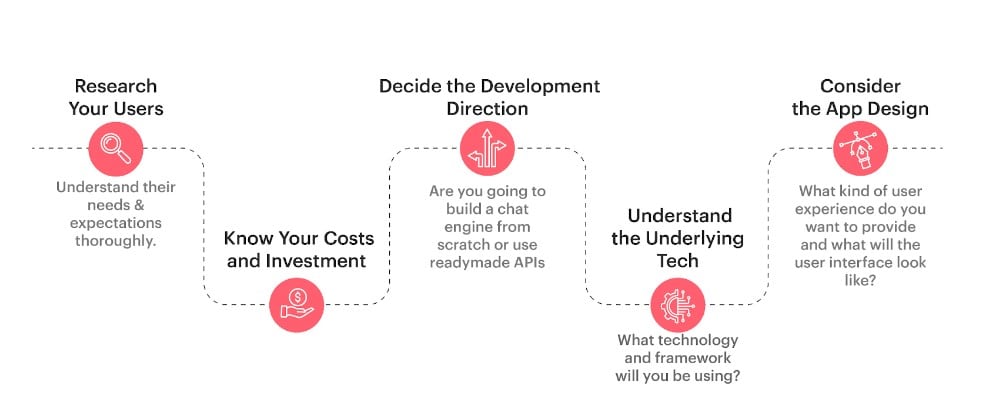
How to Build Video Calling Into Your App in 5 Steps. Source: CometChat
Here, let’s create your short AI service checklist.
- Describe your idea as fully and consistently as possible. Which service you’ll create, how it’ll connect people using video connection, and which purpose it’ll solve? Also, describe all its technological peculiarities and features and how exactly they’ll be realized on the mobile/web platform. You’ll use your language constructions to generate code with AI services, so they must be easy to comprehend.
- Create a prototype of your video conferencing app. Draw its design, describe its planned features, and make sure everything looks good.
- Upload your requests from your idea description into an AI code generation service to obtain your first code. Remember to test and customize it in your IDE.
- Start writing the custom code using intelligent services to check it and provide valuable tips.
- Connect all parts of its code and design together, using AI as an advisor at this stage.
- Test it for bugs, flaws, and usability, and then release and maintain, as in the case of any other app development.
Additional Features
It’s easy to perceive that each video chat app must have a video communication interface, screen sharing, and, probably, text messaging integrated with it. Some apps, such as Skype, seamlessly combine these two types, while others, such as Google Meets, delete all messages after a video session.
For example, Zoom can be integrated with various apps for presentations, polls, and many other features, as you can see below.
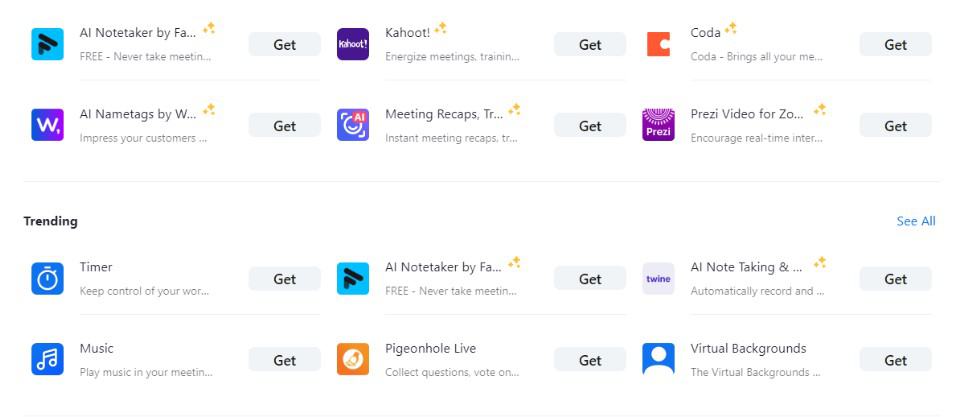
Source: Zoom.us desktop app
Let’s see which additional features may be useful for your application, so you’ll have some material to select from. Based on it, you can think and ideate to add even more of them which makes your app unique.
📧 In addition to video calls, apps may include advanced messaging features. This allows users to send text messages, emojis, and media during or outside of video calls.
🖼️ Virtual backgrounds during video calls are a good feature to customize calls, adding privacy and diversity to calls.
📣 Filters and effects, similar to backgrounds, are a good way to customize the call. They make conversations more engaging, enabling show emotions and intentions using various effects and reactions.
🎥 Recording and transcription can be highly beneficial to share the call record and analyze ideas mentioned in it deeper. It’s especially useful for work or educational meetings, as they often contain valuable information.
📥 Virtual rooms are advanced group calls, enabling people to enter and listen to main speakers. If you plan your app to support webinars, it’s a must-have feature, but it’s also used for live translations and blogging.
✅ Polls and surveys during calls are good features to gather real-time feedback from participants and ask them various questions.
🔐 Security features like end-to-end encryption ensure that video calls and messages remain private and protected from unauthorized access.
Conclusion:
Artificial intelligence is a great tool to enhance app development, and video chat apps are a highly diverse field of mobile and web applications. So, you can enter this market to improve the communications between people.
Think about which features are missing in Zoom, Skype, Google Meets, and your favorite messengers. Explore the peculiarities of various webinars and streaming platforms.
How can you integrate these various features to solve people’s demands in communications? Develop your idea as clearly and precisely as possible to deploy AI services to fasten the app development and testing.
All these actions will greatly enhance your chances of building a robust video chat app!