How often do you peek into your smartphone each day? According to statistics, every individual tends to check their phone once every 10 to 12 minutes on average. What’s with this habituation?
It’s rarely because of the phone but more related to the apps and online world that it connects us to. Therefore, Android app development has been a remunerative market in recent years. The revenue through the application development software vertical is expected to soar at a CAGR of 18.4% by 2026.
As per reports from Statista, Android OS is leading worldwide, with a market share close to 71.8%, and India has emerged as the hub for remote hiring of tech talent. Nearly 16% of the global companies are completely remote, and Indian talent addresses the widening skills gap. This is because the quality and reliability of Indian talent are invincible, with over 75% of the World’s CMM-Level 5 companies being present in India. As a consequence, the demand to hire Android developers from India is in full swing. This article will look at the top programming languages for Android app development and the popular development trends in 2023.
Your Guide to Choose the Best Programming Language for Android App Development
The Android app development industry is witnessing an evolutionary change in the past few years due to its user-friendly interface and is expected to lead the app industry in the years to come. There are more than 700 programming languages used globally, but there are a few that can be financially rewarding for your project.
Let’s look at the top 7 programming languages that can scale your Android app development project to new heights:
1. Java
A product of Sun Microsystems, Java continues to be a superior choice for Android app development. Three decades to its inception and it continues to dominate the programming market due to the following reasons:
- With a high-level, object-oriented interface Java provides platform independence to the developers for building applications.
- Owing to Java’s rich set of libraries, tools, and frameworks, developers have the flexibility to create apps that can seamlessly operate across diverse devices and systems.
- Java has a community size of 9.6M developers, which has been steadily growing over the years. Therefore, newbies can seek abundant support and resources to develop Android apps.

2. Kotlin
Kotlin, a cross-platform programming language, has been declared the official language for Android app development since 2019 by Google. Developed by JetBrains, Kotlin offers a high degree of interoperability with Java. Why is Kotlin considered an “entry point” for Android app development?
- Kotlin eliminates the redundant Java feature of null pointer exceptions.
- There is no need to end every line in the code with a semicolon.
- It’s an excellent choice for building scalable and high-performance apps with its native support for functional programming.
- Kotlin is more expressive and intuitive than Java with its extensive toolkit.
3. C++
- C++ is highly portable across distinct operating systems making it easy for developers to build cross-platform applications.
- It can be used for Android app development using the Android Native Development Kit (NDK).
- This object-oriented programming language supports dynamic memory allocation rendering a faster execution especially used by CPU- intensive apps.
However, the flip side of this language is the complexity of its use. As it’s time-consuming with an absence of high-level abstractions, it poses immense challenges in complex app development.
4. C#
If you are wondering how a programming language that only operates on Windows systems can be popular for Android app development, you are dwelling on the past. This is a bygone drawback resolved by Xamarin. It’s considered the “core” language due to the following reasons:
- Like Java, c# implements garbage collection, so the chances of memory leaks are minuscule.
- It’s a beginner-friendly language; coding is easier with a cleaner and simpler syntax.
- Being an object-oriented programming language, it supports easier management of apps.
5. Python
Despite Android not being supportive of native Python development, it’s a popular programming language for Android app development. It’s possible using third-party tools and libraries like Kivy and BeeWare.
These tools convert Python apps into Android packages that can efficiently be executed on Android devices. It’s also preferred for building machine learning models and data analytics applications in the developer community.

6. JavaScript
JavaScript is a reputed programming language globally for its versatile nature. It’s widely used for Android app development due to the following reasons:
- Utilized by several cross-platform frameworks such as Angular, Vue, and React Native.
- It’s fast and adaptable for creating compelling user interfaces and a seamless user experience.
- It’s beginner-friendly due to the extensive library support and community resources.
7. Dart
Dart is a powerful open-source programming language that powers the much prevalent Flutter framework, making it possible to deliver beautiful, high-performing apps.
The major benefit of using Dart for Android app developers is that they can view the changes instantly while working on the app. This is because Dart offers features such as hot-reload to make UI development easier for developers.
Knowing the top programming languages doesn’t suffice in the competitive programming world. If you want to develop Android apps that help you stem the competitive tide, you must stay updated with the latest trends in the industry and incorporate them into your end product.
Bonus Read: Android App Development Trends in 2023
The mobile app development industry is radically expanding and holds a progressive career growth trajectory for Android app developers. It has to do with several trends taking over the market by leaps and bounds. The top 5 trends that you must keep a weather eye on are:
1. Blockchain Technology
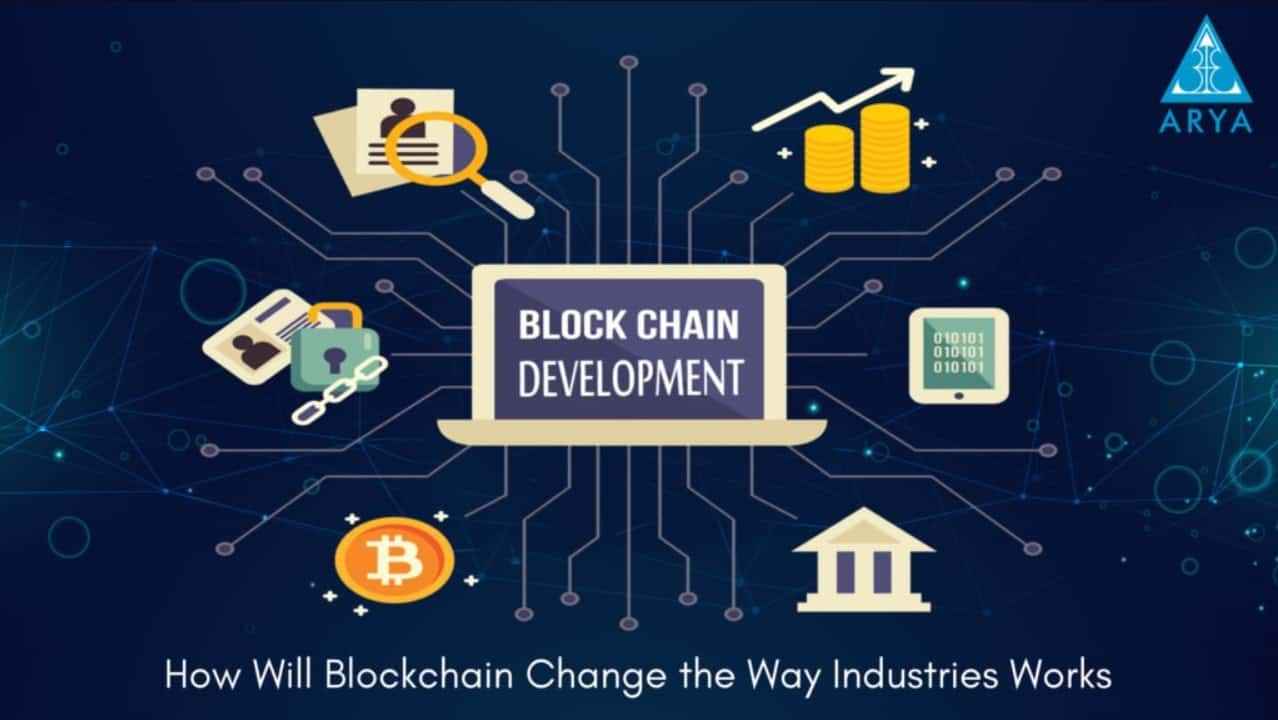
According to research, 81% of companies globally are using blockchain technology. If you are devising an app for the financial segment like banks, currency exchange, and more, you must consider incorporating blockchain. It’s because of the following reasons:
- Eliminates unauthorized access by embedding strong security protocols.
- Minimizes data loss.
- Safe and secure for data encryption.
2. Machine Learning and Artificial Intelligence
With the evolution of cloud computing, there has been a paradigm shift in the demand for artificial intelligence and machine learning technologies. The development of AI models for magnifying regular procedures is immense.
Therefore, you can build Android apps that automate tasks such as incorporating image identification, natural language processing, data analytics, etc.
3. Flutter
For multiplatform development, Flutter is a new and budding technology from Google that is considered the future of the Android app development industry. Apps like Alibaba, Google Ads, Reflectly, etc., are built with Flutter. You can utilize a native interface to create apps, and it’s a preferred tool for mobile app developers because:
- It’s combinable and flexible.
- Easy to learn.
- Exceptional interface with easy-to-access features.
- MVP development and a native design.
4. Chatbots
An advanced form of Google assistance to minimize human efforts is the advent of Chatbots. A significant advantage of incorporating this trend in your app is it can void the need for human assistance. Users can use the app straight in the assistant by deep-linking particular functions within your mobile app from the Chatbot.
Building a mobile app integration with this virtual assistant is gaining immense momentum in the digitalized generation.
5. Internet of Things
Smartphones are no longer just gadgets. With the app development industry flourishing, they have become part and parcel of our daily life through emails, smartwatches, smart TVs, sports bands, etc. It’s expected that there will be 75.44 billion connected gadgets globally by 2025.
Closing Statement
To be heard in the crowd and succeed in your app development project, you must build high-quality Android apps with the right programming languages. Since the market constantly diversifies based on user expectations, you must be mindful when hiring an Android developer. They must be well-versed in several programming languages for easy adoption when the market shifts.
Expert Word of Advice: To hire multi-skilled, qualified, and experienced candidates outsourcing Indian remote talent can be your best shot. Indian Android app developers have competence in distinct programming languages and can thus be a valuable asset for your project.