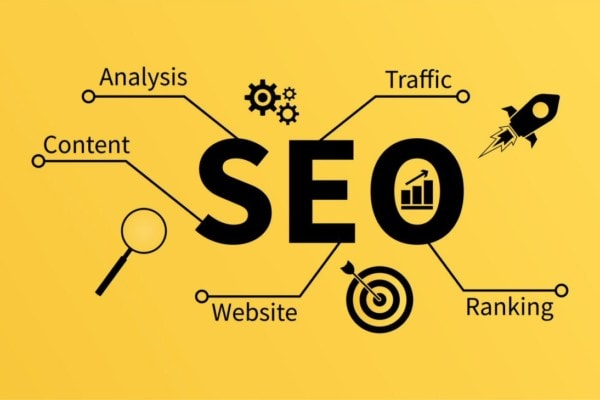
Web Design and SEO: Why and How to Optimize Your Website
Web design and SEO are often thought of as two separate worlds. They are not and shouldn’t be because one of the many important factors for your website to be successful is how well it ranks in searches. A well-optimized website will help you gain traction in the ranking game.
We’ve partly answered the importance of applying SEO to your website, but there are more reasons and we will go through them. Likewise, we will also deal with the ways you can optimize your web design to come up with a website primed for search rankings.
Web design and SEO – why and how to optimize your website is another exploration of our big-picture approach to understanding web design and its many related fields.
What is Search Engine Optimization?
Search engine optimization is a much-discussed topic. We will not delve into its science and workings but for our purpose, we’ll have a short recap of what it is and how it works. SEO refers to a set of practices intended to improve the position or ranking of websites and web pages in search results.
We go by organic search results since that is the most popular way for people to access and find content online. It is thus important to have high quality and a good quantity of organic traffic to your site. Why is this so? For your site to rank in search engines such as Google or Bing.
These search engines and others like them use spiders or bots to crawl the Internet and gather all information on all content. These bots start at a known web page and then continue to internal links of pages within the website then onto external links to pages of other sites. The bots get to understand every page and how it is connected semantically to all other pages in the huge search engine database known as an index.
When a user types something into a search box, the search engine presents organic results from its index which can include web pages filled with text, images, videos, articles, news, local business listings, and also niche content. High-quality SEO ensures that the search results match the user’s search intent.
A good SEO strategy will help rank your site high in the search engine results page (SERP). This is what you aim for because more users are likely to click the top results in the SERP. Then what has SEO got to do with web design? That correlation is what we will tackle next.
Why Should You Optimize Your Website?

Below are the more compelling reasons why your website needs to be optimized. Do remember that a potent mix of good content, appealing design and aesthetics, plus best SEO practices will do wonders for your site. Now here are answers to our section title.
1. To Improve Website Ranking
The bots that search engines use to crawl the Internet imitate how humans view websites. These search engines observe when site visitors stay or leave your site, and their algorithms will adjust your website’s rank accordingly over time. If site users leave in droves regularly, your ranking will take a hit and dive.
Now why would users leave your site? Your guess is as good as mine – poor site design (this would include not being responsive and user-friendly), low-quality content, and bad SEO practices. Now you know the importance of having an optimal mix of good content, design, and SEO – to improve traffic and ranking.
2. To Maximize and Leverage Visuals
Studies have shown that website users are attracted by imagery. That’s because humans are visual creatures, able to process pictures and images thousands of times faster than text. Visitors tend to scroll and scan websites and when they see engaging visuals, that’s the time they stop and stay to read content. The longer the user stays and the more users there are will again be noticed by search engine bots which can lead to improvements in rank.
Now how do you leverage visuals? Web design will have much to do with that as well as the application of good SEO. A good web designer knows where to put the right images on your homepage for maximum impact as well as the accompanying stylized banner headings and titles that get attention. Then put the SEO practice of putting metadata in your images and your site will be noticed both by bots and humans.
3. To Boost the Indexing of Your Website
A good web design addresses the requirements of users and search engines. It makes navigation convenient and provides great interaction and experience for your site visitors. Likewise, an optimal web design makes it easy for bots and crawlers to index your site.
Together, the best SEO and web design practices like properly formatting URLs, laying out a site map, creating keyword-focused and error-free content as well as using engaging imagery, among others, will boost the indexing of your site and improve your rankings.
4. To Make Your Site Responsive
Site responsiveness is a significant factor for ranking. This means your website should be designed to be mobile-friendly or responsive to the screen size of whatever device the site is being viewed on. Being mobile-friendly was made a ranking factor by Google in 2015 and two years later unveiled mobile-first indexing.
The responsibility would fall on the web designer or web developer to ensure the optimization and responsiveness of your website. Websites that do not properly load or open on tablets and phones can result in high bounce rates and will be observed by search engines, thus affecting your ranking.
How Do You Optimize Your Website?

What are the ways to optimize your website? Many of these can be done from the ground up while you or the web designer and developer are designing and building your website. It helps to have an SEO specialist providing guidance and suggestions right there in the design process.
If you already have an existing website, SEO practices can be applied during a redesign or implemented gradually to ensure site continuity and avoid disruptions. It is advised that you introduce these SEO and web design tips to reap better rank performance the soonest time.
1. Ensure Readability
Readability does not only concern text but also the overall clarity and cohesiveness of design. As such, you should avoid small fonts and probably go for sans serif type. Also, do away with pale colors that do not stand out or use distracting design elements that clutter or are unnecessary. Keeping web design simple and minimalist aids in readability and results in a good user experience.
2. Meta Those Images
Don’t forget to put meta descriptions in the images on your website. This makes it easier for search engine bots to index them. Of course, images are only one of the many design elements that support your content which should be relevant, fresh, engaging, and well-optimized. Content will carry your design choices so they must be SEO-friendly in the first place.
3. Apply Responsive Design
Again, this can’t be emphasized enough when more and more people search the Internet using mobile devices. The good thing is that applying responsive design is not a recurring cost or activity – it is only done once, right there when the designer or developer is building your website. So, it’s not something to be taken out of the equation to reduce time and expenses.
4. Avoid Using JavaScript and Flash
Search engine bots don’t easily understand Flash and JavaScript. While these programming languages can help you create “rich” websites, try limiting their usage to non-critical elements in your site. Besides there are more modern building blocks like HTML, CSS, or JS derivatives that you can work with for building your website and its components.
5. Speed Up Your Site
This refers to fast loading times for your website. Research shows that people leave websites that are slow to open. Slow means just three seconds of loading time and beyond that people won’t be interested enough and would simply abandon your site. You can’t afford that because it will hit you where it hurts – your site ranking. Optimizing your content like having web-sized images and light, easy-to-load designs will contribute to having a fast-loading website.
There are other SEO tweaks for your website that you can do. We invite you to read our article on the ultimate keyword research checklist for good SEO as well as our piece on the common SEO mistakes you must steer clear of. These are meant to help you craft optimized content for your website.
Web Design and SEO Should Go Together
By now you get the point on why web design and SEO should go hand in hand. In the same vein, this means having a web designer or web developer and an SEO specialist on the same team. Our article on web design jobs and roles will give you a clearer picture of what these professionals do in a full-service web design agency. Suffice it to say that the continued success and overall performance of your website will hinge on the implementation of solid web design and sound SEO. These are areas that should be high on your website priorities.