What are the different web design jobs and roles, and what are their potential earnings? There are many working opportunities in the web design industry. Some think that it is only for web designers and web developers. This is a misconception. There are several roles to fill in, especially as part of a design team or design agency.
We will explore all these jobs in web design and development to give you a career and work perspective of the industry. You may be a fresh graduate looking for a job or one already in the industry and planning on taking on another role. You’ve come to the right place for key information.
This article is another episode in our article series on web design. It is our view that web design can be better understood by using a big-picture approach, tackling the many disciplines and areas related to it. Examining the works and jobs in the industry would be one aspect of getting a solid grasp of the world of web design.
Team Roles in the Web Design Process

To have a sound understanding of the various roles in web design and development, we will view them in the context of the web design process undertaken by a full-service web design team or web design agency.
We’ve written beforehand that a web design agency is better than an in-house design team. It is also one of the web design service options for small businesses. Roles will dictate the job required and the work to be done.
Hence, a design agency will have individuals with specialized skills and particular roles. Some individuals in an agency or team may have dual roles or perform more than one function. For example, a UI designer may also be a UX designer. As such, there can be as few as four to five people multitasking in a team or as many as a dozen, each with a dedicated role.
We will go through each of these roles in the regular web design and development process. We’ll take a look at the tasks and responsibilities normally attached to that specific role and the estimated industry income range or potential earnings for the job. Let’s begin.
1. Business Analyst
The Business Analyst is also known in the industry as the Requirement Specialist. It is the business analyst who is the first to get down to work before anyone else in the team, getting and analyzing the requirements of the client, and documenting these.
The documentation will contain the client’s vision for the web design project, the scope, and technical specifications. It will serve as the initial blueprint that will guide the project manager in coming up with a project plan.
Duties and tasks:
- Understand the goals, requirements, and business strategies of the client.
- Document, plan, and lay down the technical specs of the project.
- Anticipate and foresee possible issues that may arise and mitigate these.
- Budgeting, forecasting, and performing financial analysis so the client and the project manager know the budget and cost limitations.
Skills and competencies:
- Business, finance, or management degree
- Good communication and collaboration skills
- Adept at business/data/financial analysis
- Knowledgeable in business planning and strategy
- Industry experience and expertise
- Problem-solving skills
Potential earnings:
For potential earnings we will look at the reported salary range for the job in US dollars and the American IT industry in general and, if available, the web design industry in particular. In the U.S., the pay range for a business analyst is typically between $74K and $90K with an estimated annual average of $81K. Salaries vary widely as many factors come into play like certifications, education, experience, and extra skills, among others.
2. Project Manager

The project manager ties everything together with the main responsibility of directing and coordinating the activities of team members so everything runs smoothly, efficiently, on time, and within budget. From the specs and requirements determined by the business analyst, the project manager draws up a plan that sets the project objectives, individual team member goals, deadlines, milestones, project stages, processes, and others. The project manager establishes regular coordination and communication with the team and the client to keep everyone informed and on the same page.
Duties and tasks:
- Coordinate and consult with all stakeholders – client, team, and management (if with a design agency) concerning everything about the website from start to finish.
- Draft a project plan and document procedures and processes.
- Produce updates and progress reports for management.
- Initiate timely troubleshooting and relevant interventions to ensure project delivery within budget and on time.
- Provide mentorship, advice, and direction to the team.
Skills and competencies:
- Computer science degree with coursework in web design, web development, graphic design, project management, and related fields.
- Two years minimum experience in managing web projects.
- High proficiency in programming languages such as JS, HTML, and CSS.
- Comprehensive knowledge of web design trends and innovations.
- Excellent leadership, time management, organizational, communication, and collaboration skills.
Potential earnings:
A web project manager in the U.S. can expect a “possible” annual salary range from $66K to $167K. That is the widest extent which can be narrowed down to the “most likely” salary range that can go from $82K to $134K with a median of $104K.
The higher figure range is in the IT sector and all years of experience (15+ years). Other factors affect pay scales like education, certifications, and additional competencies.
3. Solution Architect
For today’s businesses and organizations to run smoothly, they depend on various integrated and interconnected technologies. As more companies rely on complicated software architectures, Solution Architects come in to make sense of it all and bridge the gap between business and technology. In a web design and development team, the SA takes the role of suggesting and setting up the best software and solutions required by the team for a particular project such as the most optimal type of hosting platform, website builder, design tools, site components, cloud service, security features, etc.
Duties and tasks:
- Design and customize software products to match and address particular web design issues or situations.
- Collaborate with the web design team on their hardware and software requirements when it comes to data storage, networking, data security, system configuration, and other areas of computing.
- Coordinate with the project manager, client, and other stakeholders so everyone understands the operating environment.
- Understand the existing software stack of the design agency and determine the suitability of its architecture from a technical and functional perspective.
Skills and competencies:
- STEM education
- Solid foundation in programming and coding
- Knowledge of different software designs and architecture
- Project management hands-on experience
- Deep understanding and experience in various computing disciplines
- Communication, collaboration, negotiation, and organizational skills
Potential earnings:
Solutions architects are some of the highest-paid professionals with a pay range from $129K up to $331K. In the IT sector, they can have a median salary of $215K per year. Most of these jobs are at large tech companies like Google, Amazon, and Meta. It is thus understandable that this role seldom exists in small design agencies and is instead filled in by the project manager or web developer, particularly a full-stack developer.
4. Web Designer

Web Designers are creative professionals who use their computer, software, and programming knowledge to design and build websites. Oftentimes, they carry many skills and can handle multiple roles. In a small design team, the web designer may also be the web developer, UX/UI designer, graphic artist, and animation/motion designer. Even as a freelancer, a skilled designer with all-around experience can likely perform most of the roles listed in this article. That is because the web designer needs to have a deep knowledge and understanding of the different disciplines needed to build sites that are easy to use and understand, and follow design specifications and standards.
Duties and tasks:
- Conceptualize creative and design ideas for the website
- Set up design guidelines and best practices.
- Apply and enforce accepted web, content, and design standards.
- Design or utilize visuals, imagery, video, and other multimedia content for the website.
- Work on different content management systems.
- Come up with wireframes, mockups, site maps, and architecture, process flows, etc.
- Incorporate functionalities and features into websites.
- Present the website structure.
Skills and competencies:
- Bachelor’s degree in a relevant field. Note that while education is not a barometer of success, many employers and clients still consider it a major determinant for career advancement, promotion, and salary grade.
- Certifications and coursework (ex. web design, graphic design, programming).
- Proficiency in graphic and web design software (ex. Photoshop, Figma, Webflow).
- Knowledge of front-end programming and its tools (CSS, HTML, JS, jQuery)
- Updated on international web standards, protocols, and technologies.
- Outstanding visual design and creative skills.
- Great at communication and collaboration.
- Proven work experience.
Potential earnings:
U.S. web designers have estimated salaries from $41K to $97K with median salary pegged at $62K per year. An additional annual pay of roughly around $5K is realized from tips, commission, cash bonus, or profit sharing.
5. Graphic Artist
A Graphic Artist or Graphic Designer takes care of a project’s visuals whether these are for print or the web and, for our purpose, a website. As mentioned in the preceding section, a web designer can also be a graphic designer because they would need to learn and have the experience required for both roles. But creating or designing visuals and graphics is the main task of a graphic designer. For a website, these can include artwork, illustrations, stylized titles and headers, artistic fonts and text, and many others. A website’s functional and meaningful visuals fall under the purview of the graphic artist.
Duties and tasks:
- Consult with the client and team on the website’s visual requirements.
- Recommend and create visual content and graphics fit for the site.
- Develop and maintain a library of visual assets.
- Design the client’s logo and other graphics for use on the website.
- Create illustrations, clipart, vectors, icons, and other similar digital elements.
- Select and edit images/photos for the website.
- Supervise or assist in web layout and typography.
- Choose color schemes, fonts, and other design components for the site.
- Test the website to ensure unity and integration of design and graphic elements.
Skills and competencies:
- Graphics design degree or a related field. Note again that similar to web design, education is not a success yardstick but still a key career advancement factor.
- Understanding and grasp of programming languages.
- Proficiency in graphic design software tools.
- Great communication and interpersonal skills.
- Good at time and task management.
- Agency or work experience (some employers and clients inquire about this).
Potential earnings:
Estimated salaries range from $31K to $70K with average yearly pay of $46K and an additional annual income of about $2K.
6. Motion Designer
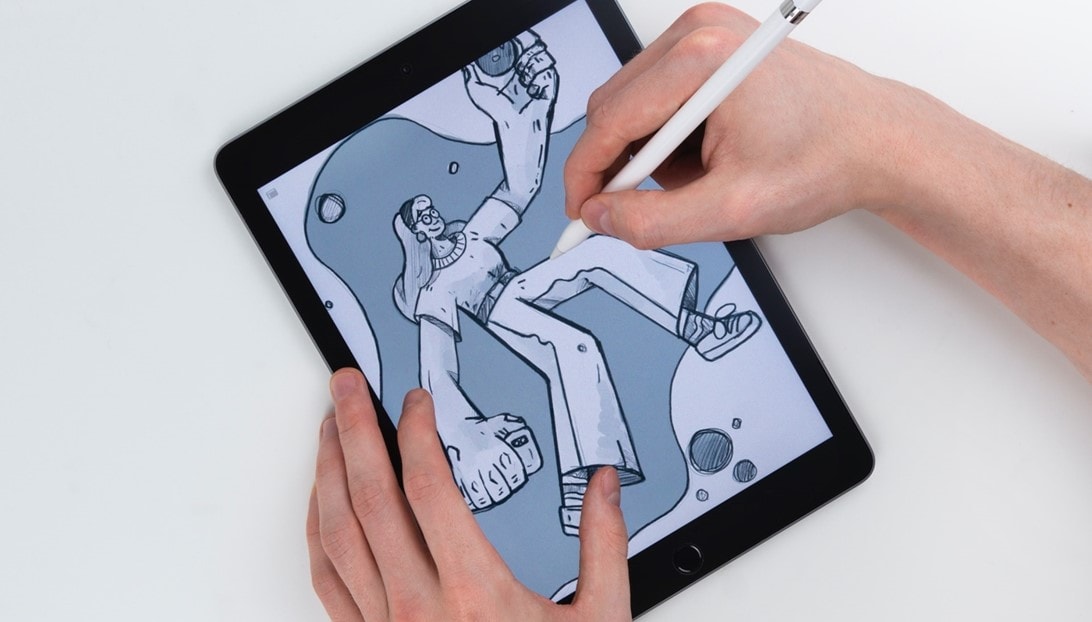
A Motion Designer or Motion Graphics Designer deals with animation, visual effects, and audio elements. Motion graphics refer to an animation type that converts inert or still designs into moving pictures, usually in 2D or 3D form. It is popularly used in games, videos, apps, and ads. Lately, it has gained widespread use in websites because animation draws visitor attention, making it a compelling design element for UI and UX. Motion designers use their expertise to incorporate this kind of animation into websites and create interesting digital visual displays. Motion design is meant to relay short but impactful information and messages such as on a site’s homepage to attract viewers. It is not intended to tell narratives or stories because video is a better medium for those.
Duties and tasks:
- Consult and collaborate with clients and the web design team.
- Create motion design animation for websites.
- Suggest motion design concepts and ideas suitable for a site.
- Maintain and select visuals, audio, fonts, images, and other design assets used for animation.
Skills and competencies:
- Knowledge of design principles and elements in general and animation and motion graphics in particular.
- Creative thinker and good attention to visual details.
- Mastery of motion design and graphics tools (ex. After Effects, Illustrator, Photoshop, Blender).
- Good communication, collaboration, and organizational skills.
Potential earnings:
From $42K to $92K with an average annual base salary of $62K.
7. Content Writer/Copywriter
A Content Writer can also be the Copywriter and is in charge of crafting optimized textual content for websites such as blogs, articles, news, titles, messages, posts, greetings, announcements, updates, About Us, company background, and other essential information that the client want to include in the website. A copywriter will be more focused on creating short promotional and marketing copy like ads and landing pages for conversion purposes. Carefully crafting relevant, fresh, and SEO-optimized content is important for search ranking. And remember that content dictates and defines design choices. Good website design emanates from good content.
Duties and tasks:
- Consult with clients for their content requirements.
- Collaborate with the team to ensure that the design ties in with the website content and purpose.
- Research the subject and craft articles.
- Apply content SEO best practices.
- Perform content quality check and perform edits to ensure voice and style.
- Identify content gaps and recommend improvements.
- Come up with an editorial calendar and schedule if the client so wishes.
Skills and competencies:
- Deep understanding of rules and principles on grammar, sentence construction, vocabulary, editorial direction, content types, etc.
- Great research, presentation, and creative writing skills.
- Proficient in the use of writing tools and aids like word processor programs, grammar and spelling checkers, plagiarism checkers, and similar software.
- Knowledge of SEO techniques and practices.
- Good at time management and problem-solving.
- Good at communication, collaboration, and providing feedback.
Potential earnings:
The salary scale ranges from $36K to $77K with an average of $50K per year.
8. Web Developers

While design and development are two distinct disciplines, they are so interconnected that the Web Developer can also be the Web Designer and vice versa. They both work with programming languages although essentially this is the specialization of web developers. If web designers do pixel-level tweaks to come up with visually appealing website aesthetics, a web developer undertakes granular operations to ensure that a website will have the capacity to perform flawlessly and function as intended. As far as roles go, there are three major types of web developers:
Front-end Developer
The front-end developer is responsible for the client side or visual part of a website – those that a site visitor sees and interacts with. These include the site design, layout, user interface, and functional components that are made out of the web’s building blocks like CSS, HTML, and JavaScript.
Back-end Developer
The back-end developer handles the server side of the website or everything that occurs beyond the user interface. These cover server-side scripting, database (creation and management) as well as the site’s overall functionality. This developer works with code frameworks and languages such as Python, PHP, and Ruby, among others.
9. Full-stack Developer
A full-stack developer handles both the work of back-end and front-end development. With extensive knowledge and a wide range of skills, this developer can build complete websites and web apps inside and out.
Duties and tasks:
The responsibilities of a web developer can vary depending on the web project, the requirement of the client, the work defined by the employer (agency or organization), or the situation (ex. as a freelancer). But generally, tasks may include:
- Collaborating with the client or team regarding the project.
- Designing navigation controls, menus, and user interfaces.
- Writing and examining website codes and programming.
- Testing and optimizing user interface and site performance.
- Pinpointing potential problem areas and troubleshooting issues.
- Integrating design elements and multimedia content on the website.
Skills and competencies:
- Computer science or software engineering degree or related fields. Many successful web developers are self-taught. But again, having a solid educational foundation will reap rewards.
- Technical proficiency in programming languages, libraries, and frameworks.
- Deep understanding of visual and responsive design.
- Strong collaboration, communication, and organization skills.
- Detail-oriented and problem solver.
Potential earnings:
The salary scale of web designers can range from $54K to $127K with an estimated base pay of $77K plus additional pay of $5K (commissions, bonus, tips, etc.) This will put the yearly total average at $82K per year.
10. UI/UX Designer

A User Interface Designer and a User Experience Designer are separate roles. But they are also quite entwined in the sense that a great UI will elicit or result in a great UX. Functionally, however, they are distinct.
UI Designer
User interface designers are tasked with creating the website’s graphical elements that visitors or users interact with such as buttons, drop-down menus, toggles, and scrollers. As such, the UI designer is in charge of building these interactive elements, making layouts to place and arrange them, applying the right colors and fonts, and producing wireframes to see how the final design will appear. The designer will collaborate with web developers to transform the designs into actual website elements.
UX Designer
User experience designers hone in on creating an engaging website experience for users. For this purpose, the designer will map out the user’s journey and analyze how the user interacts with the site. Certain site designs and functionalities may be tweaked and optimized to make them more accessible, responsive, and enjoyable to the user. The designer can then build prototypes to show how the final site design will look like. User testing may also be done to affirm design decisions or identify issues.
Skills and competencies:
- UI Designer – Knowledge and understanding of design elements, typography and layout, color theory, and animation/interactivity.
- UX Designer – Knowledge and understanding of user needs and behavior, product strategy, iteration and testing, and information architecture.
- For both – Insights and grasp of human empathy, collaboration and communication, design outlook and thinking, and adept at wireframing and prototyping.
Earning potentials:
- UI Designer – From $65K to $153K with a total estimated median salary of $98K.
- UX Designer – From $59K to $153K with a total estimated median salary of $94K.
11. QA Engineer
The Quality Assurance Engineer is there to ensure that everything on your website gets a checkmark and is ready for launch. The specialist will do tests of your website’s different components, functionalities, and applications to see that they are performing as intended. If there are bugs and glitches in certain areas, he will do troubleshooting or inform the person responsible in that area.
Duties and tasks:
- Draw up a quality planning strategy for the web design and development stages.
- Create testing processes and develop KPIs to measure website performance and quality.
- Test the different components and functionalities of the website to pinpoint issues and find solutions.
- Recommend improvements to the site’s functionality and quality.
- Document tests and results for use in future web projects.
Skills and competencies:
- Comprehensive understanding of website technical specs
- Knowledge of web development and design process
- Familiarity with tools used for bug tracking and test management
- Grasp of programming languages
- Good at communication and collaboration
- Problem-solver and critical thinker
- Attention to detail
Potential earnings:
The salary range is from $50K to $131K with an average annual rate of $81K. Again, factors that determine pay include education, experience, certifications, and skills.
Additional Roles
You may not go this far in the process and opt to wrap up with the website launching and the necessary maintenance afterward. But the next two roles are essential to gain search engine traction, improve your site’s online presence, and enhance your website’s revenue potential. While these are marketing roles, they are often integrated into a full-service design agency to cover the end-to-end technical and business side of web design and development.
12. SEO Specialist

As part of a web design agency, the SEO Specialist’s main job is to help rank a client’s website based on key terms. We will not delve into the specifics of search engine optimization, but we invite you to read the ultimate keyword checklist for good SEO to get useful insights on the topic. The SEO specialist will apply SEO techniques to a website’s content and will tweak certain parts like titles and copy according to SEO best practices. These are to bring traffic to the website to generate leads or sales, especially if it is an e-commerce site.
Duties and tasks:
- Undertake competitive analysis and keyword searches to optimize site content.
- Extend technical SEO support and supervise site indexing, crawling, XML sitemap generation, and other similar activities.
- Suggest techniques and direction for content development based on SEO goals.
- Utilize data from web analytics to evaluate the effectiveness of SEO initiatives.
- Monitor, analyze, and report on metrics related to conversions, clicks, impressions, SEO performance, etc. and give suggestions for optimization.
Skills and competencies:
- Knowledgeable in content and technical SEO
- Proficient in using the tools of the trade like Google Analytics, Ahrefs, SEMRush, and others.
- Adept at analytics know-how, presentation, and reporting
- Good understanding of branding and marketing
- Good at communication and collaboration
Salary range:
Possible range of $38K to $90K and a most likely range from $46K to $73K with an annual average of $58K.
13. Web Marketing Strategist
A Web Marketing Strategist works in tandem with an SEO Specialist but while the latter is focused on SEO, the former is preoccupied with a website’s strategic promotion. The end in view is the same for both roles – to drive relevant traffic and attract as many people to the website who are interested in its services or products. A person with deep knowledge and experience in SEO and marketing can handle both roles of marketing strategist and SEO specialist.
Duties and tasks:
- Establish marketing KPIs
- Conduct website analysis
- Create high-value content
- Develop and pursue mobile optimization
- Map and monitor the user journey on your website
- Develop email campaigns
- Leverage pay-per-click ads if amenable to the client
- Research and forecast marketing trends
- Track and report
Skills and competencies:
- Knowledge of SEO and website development
- Familiar with market research and data analytics tools
- Adept at copywriting
- Social media marketing savvy
- Firm grasp of email marketing
- Strategic and analytic thinker
- Communication and collaboration
Salary range:
From $44K at one end to $101K at the higher end with an average base salary of about $65K per year.
Part of a Team or Freelance?
This has been the perennial question, the answer of which ultimately is up to you. Freelancing means you’re the boss and can set up your own time, schedule, pay rates, etc. You can even be selective and choose your clients and you don’t have to rush and go to the office. Usually, you’re a digital nomad who works remotely at home.
But going solo translates to you doing all the heavy lifting – appointments, scheduling, finding potential clients, preparing invoices and billing, aside from handling most of the stages in the web design process to meet the agreed upon deadline and delivery. You don’t have a team as a support group.
Unlike in a design agency or a web design team in a corporate setting, you don’t have to be the jack-of-all-trades because roles and responsibilities are clearly defined. You work on set rules and budget and can expect to be paid on time with your regular salary. Of course, this is routinary 9 to 5 office work which could soon lose its appeal to an artistic and creative spirit.
There are pros and cons on both sides of the fence and your decision hinges on your capacity and resolve. You can read freelancing tips and guides in our blog to know more about having a solo business. In career choices such as these, it helps to make informed decisions.