In 2024, the web landscape has continued to evolve, and as a result, innovative trends of website design are gradually reshaping different real estate domains. The main objective of these trends is to attract consumers who want to purchase or sell their property but at the same time offer them an immersive and captivating online experience. Here are some interesting facts about the most fascinating tendencies in designs for real estate websites in 2024.
Virtual Tours: A New Standard in Property Viewing
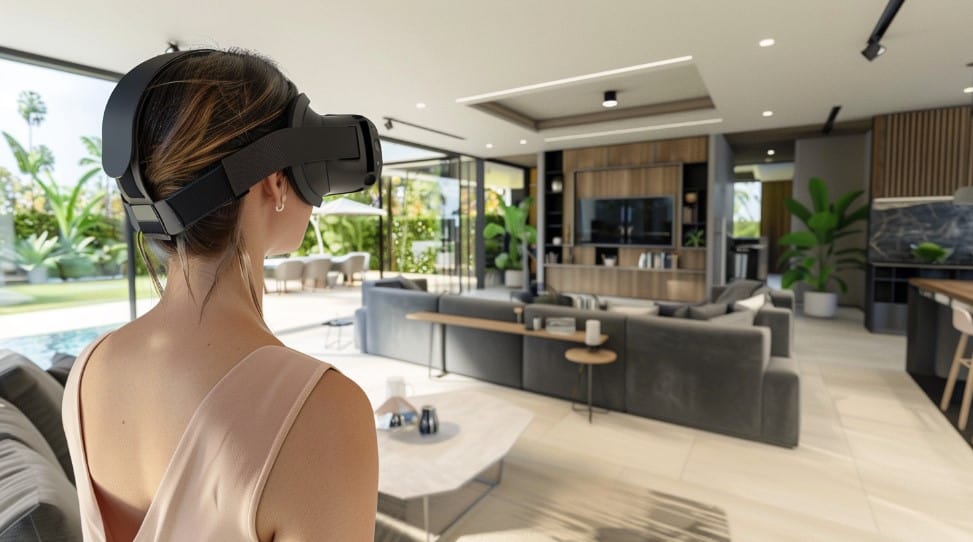
Previously being associated with luxury, virtual tours have now become a standard expectation on every other real estate website. In 2024, these tours have greatly improved in that they are now giving you a chance to explore every corner of your home with a 360-degree view. Today, even the most advanced virtual tours support VR (Virtual Reality) technology that allows you to put on VR headsets and experience it as if you are there. This way not only makes user experience more marketable but also saves time of both clients and agents due to excluding those properties which do not meet buyer’s requirements.
Dynamic Maps: Beyond Basic Location Information
In 2024 dynamic maps have gone beyond mere basic location information. These interactive maps are embedded with live data such as schools around it, shopping centers, hospitals and even traffic jam conditions thereby enabling potential buyers receive full information about the neighbourhoods they intend purchasing houses from. Some real estate sites went ahead and added demographic statistics as well as historical property values making it possible for buyers to make informed choices based on the area’s growth potential.

Interactive Property Listings: Engaging Users Like Never Before
Interactive property listings have changed how properties appear online. Now images don’t just stand still or display description text for you to read; that was back in yesteryears! In 2024 listings feature extensive interactivity where items may be transitioned into other states on hover or individual elements animated plus there may be micro-interactions like expanding a tile content after a click. This makes browsing much more fun, while also enabling sellers to present their property’s key attractions in a more lively manner.
AI-Powered Search and Recommendations
Artificial Intelligence (AI) is now used for personalized search experiences and recommendations on real estate websites. AI algorithms analyze user behavior, preferences and search history to recommend properties closest to what the user is looking for.
On one hand this personal approach builds engagement on the part of users but on the other it increases instances where buyers match with suitable properties thus enhancing efficiency of searching.
Mobile-First Design: Catering to the On-the-Go User
Since property searches are predominantly done on mobile devices, adopting a mobile-first design has become essential for real estate websites in 2024. In this trend, web designers concentrate on making sites which are optimized specifically for mobile devices with such attributes as fast loading time, ease of navigation or seamless experience regardless of screen size. Also included within mobile-first design is integration of features like click-to-call buttons and GPS-based property finding tool that facilitate connection between users and agents through showing houses nearby. In this evolving digital landscape, these innovative web design trends are also making it easier and more appealing for international buyers looking to buy real estate in Turkey offering a seamless online experience to explore and purchase properties in this vibrant country.
Conclusion
Digital transformation in the real estate industry is happening at a fast pace, with innovative trends for web design taking the lead by 2024. It is not only about trends but also virtual tours, dynamic maps, interactive property listings, AI-powered search and mobile-first design that have become necessary for real estate websites to remain competitive. Professionals in this field can use these changes to give unique experiences online which will increase new buyers and sellers as well as set up new benchmarks in the sector. As technology advances further; so does the potential for engaging and immersive real estate websites; thus, affecting the future of real estate marketing and sales.