
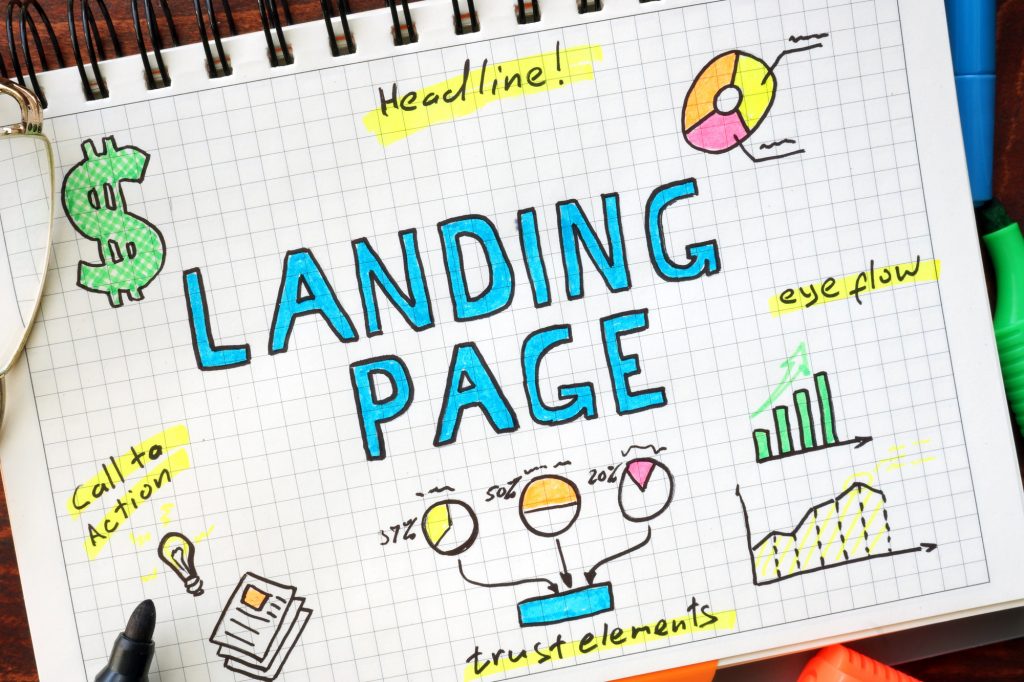
In the digital marketing realm, a landing page is more than just a destination—it’s the first impression, the pitch, and often the deciding factor in turning a visitor into a lead or customer. A well-crafted landing page can significantly boost conversion rates, while a poorly designed one can send potential customers running.
To ensure your landing page is poised for success, it must encapsulate certain key elements that engage, inform, and motivate your audience. Here are the five must-have elements for creating an effective landing page.
Compelling Headline
The headline is arguably the most critical element of your landing page. It’s the first thing visitors see and sets the tone for their entire experience. A compelling headline should be clear, concise, and directly tied to the value proposition of what you’re offering. It needs to grab attention and make a promise that the rest of the landing page will deliver on.
- Clarity is Key: Avoid jargon or overly complex language. The headline should be easily understood at a glance.
- Make It Benefit-Focused: Highlight the primary benefit your product or service offers to the user. What problem does it solve? How does it make their life better?
- Keep It Short and Sweet: Aim for a maximum of 10 words. A succinct headline is more impactful and memorable.
Engaging Visuals
Humans are visual creatures, and the right images or videos can communicate more about your product or service than blocks of text ever could. Visuals not only break up the content, making it easier to digest, but they also help to convey emotions, benefits, and brand identity.
- High-Quality Images: Use professional, high-resolution images that are relevant to your content. Custom graphics and photos are preferable to generic stock images.
- Product Demonstrations: If applicable, include a video demonstration of your product or service in action. This can significantly increase user engagement and understanding.
- Consistency in Branding: Ensure that the visuals on your landing page align with your overall brand in terms of style, color scheme, and ethos.
Persuasive Copy
The copy on your landing page is your opportunity to communicate the value of your offer and persuade visitors to take action. Every word should serve a purpose, whether it’s to educate, engage, or elicit an emotional response.
- Highlight the Value Proposition: Clearly explain what makes your offer unique and why it’s the solution the visitor has been searching for.
- Use Bullet Points: Break down benefits or features into easily digestible bullet points. This format is more skimmable and allows users to quickly grasp the value of your offer.
- Include Social Proof: Testimonials, reviews, or case studies lend credibility to your offer and can be a powerful persuasion tool. They show that others have benefitted from what you’re offering and enjoyed positive results.
Clear Call-to-Action (CTA)
Your CTA is the culmination of your landing page. It’s what you want your visitors to do next, be it sign up, make a purchase, or download a resource. A compelling CTA is clear, direct, and impossible to ignore.
- Visibility: Make your CTA button stand out with a contrasting color and sufficient white space around it.
- Action-Oriented Language: Use verbs that inspire action, such as “Get,” “Start,” “Join,” or “Download.” The language should be urgent and indicative of the benefit.
- Keep It Singular: Focus on one primary action you want users to take. Multiple CTAs can confuse visitors and dilute the effectiveness of your landing page.
Trust Signals
Trust signals are elements that help build trust and credibility with your audience. They reassure visitors that their data is safe, their investment is worthwhile, and their decision to engage with your brand is the right one.
- Security Badges: If you’re selling a product or collecting information, include security badges or encryption notices to reassure visitors that their transactions and data are secure.
- Guarantees: Offer a satisfaction guarantee, money-back guarantee, or a free trial to lower the perceived risk of taking action.
- Press Mentions and Certifications: If your product or company has been featured in reputable media outlets or received industry certifications, display these badges prominently.
Advanced Hacks and Tips for Optimizing Your Landing Page
Beyond the essential elements outlined above, there are several advanced strategies and hacks that can further optimize your landing page for higher engagement and conversions. Implementing these tips can give you an edge, making your landing page not just good, but exceptional.
A/B Testing: The Path to Perfection
A/B testing, also known as split testing, involves comparing two versions of your landing page to see which one performs better. By changing one element at a time (such as the headline, CTA, or an image) and testing your changes with real traffic, you can gather data on what resonates best with your audience.
- Start with Hypotheses: Base your tests on specific hypotheses. For example, “Changing the CTA button color to blue will increase clicks.”
- Test One Change at a Time: This ensures that you can clearly attribute any differences in performance to the change you made.
- Use the Right Tools: Utilize A/B testing tools that can seamlessly split your traffic and provide clear analytics on the performance of each version.
Leverage the Power of Psychology
Understanding and leveraging psychological principles can significantly enhance the persuasiveness of your landing page.
- The Principle of Scarcity: People are driven by the fear of missing out (FOMO). Highlighting limited-time offers or limited stock can create a sense of urgency and encourage quicker decision-making.
- Social Proof: Beyond testimonials and reviews, include real-time stats if possible (e.g., “2,000+ people signed up in the last 24 hours”) to showcase the popularity and trustworthiness of your offer.
- The Bandwagon Effect: People are more likely to do something if they see others doing it. Phrases like “Join thousands who have already…” can tap into this psychological principle.
Optimize for Speed and Mobile
In today’s fast-paced digital world, speed and mobile responsiveness are non-negotiable for landing pages. A slow-loading page or a page that doesn’t display correctly on mobile devices can drastically increase your bounce rate.
- Compress Images: Use tools to compress images without losing quality to ensure they don’t slow down your page.
- Minimize Use of Heavy Scripts: Heavy JavaScript frameworks or too many animations can slow down your page. Use them sparingly.
- Mobile-First Design: Design your landing page with mobile users in mind first, ensuring it’s responsive and easy to navigate on smaller screens.
Simplify the Journey
The path from landing on your page to taking the desired action should be as frictionless as possible. Simplification is key.
- Minimize Form Fields: If your CTA involves filling out a form, ask for only the essential information to reduce perceived effort and increase conversions.
- Clear Navigation: If your landing page is part of a larger website, ensure navigation is intuitive but doesn’t distract from the primary action you want users to take.
- FAQ Section: Anticipate and answer common questions right on the landing page to overcome any potential objections and reassure visitors.
Conclusion
An effective landing page is much more than a beautifully designed webpage; it’s a carefully crafted marketing tool designed to convert visitors into leads or customers. By incorporating these five essential elements—compelling headline, engaging visuals, persuasive copy, clear call-to-action, and trust signals—you can significantly increase the chances of achieving your conversion goals.
Remember, the key to a successful landing page is continuous testing and optimization. Use analytics and user feedback to refine and improve your page over time, ensuring it remains a powerful asset in your digital marketing strategy.

