Every day more and more people choose mobile applications to conduct regular financial transaсtions. The growing popularitу of e-wallets has provided users with a convenient way to pay for goods and manage their finances in general. Thanks to digital wallets, you don’t have to worry about forgetting your bank cards or cash. Now, a smartphone is becoming a universal tool for fast and secure financial transactions. In turn, for developers and entrepreneurs who want to launch their own e-wallet application, it is crucial to understand every stage of creating such a program. After all, user trust depends on how securely their funds are stored. So, how to make a wallet?
Research. Project Planning
- Study the target audience
You need to understand what features they expect from a mobile wallet. Users have a wide variety of needs. From transferring funds and paying bills to integrating with bank accounts or cryptocurrency services.
- Study the market and competitors
Pay attention to how other apps solve key problems. In particular,
- data security,
- speed of work,
- usability.
- Draw up the terms of reference (TOR)
It should include all the main functions of the application. It is important to understand how the e-wallet should work. This way you can clearly define functional and non-functional requirements for it.
- Create a prototype based on the technical specification
It will help you visualize the future interface and test the UX/UI solution before starting development.
Features and requirements of e-wallet app development
The development of an e-wallet application includes numerous aspects. The key ones are functions for secure storage of financial data, support for various payment methods, as well as a convenient transfer system along with flexible integrations with banking systems and e-commerce services. For entrepreneurs, e-wallet for business features are critical. The ones that will allow transactions between accounts with minimal fees and integrate with accounting services. When we talk about e-wallet app development, we want to know what is included in e-wallet app development services. This includes the planning and design stages. As well as backend and frontend development along with testing. Thanks to the right combination of these stages, you can create a product that meets the requirements of the modern market. Since an e-wallet application stores and processes sensitive financial data, it is necessary to adhere to high security standards.
Development of the Main Functionality
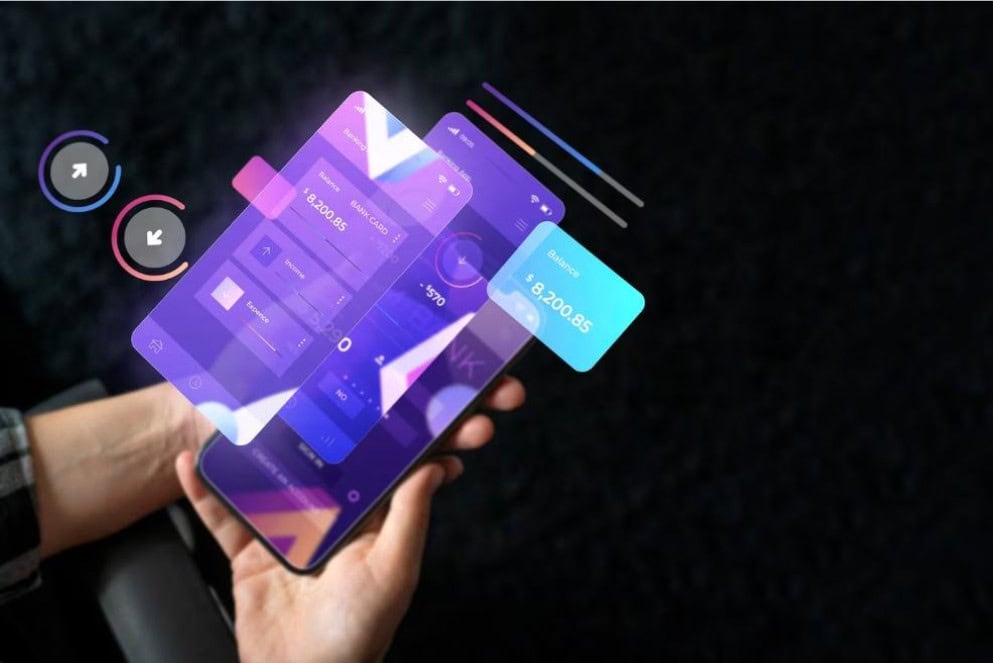
Image Source: Freepik
Mobile wallet app development in the sense of electronic wallet development includes the following mandatory functions.
This is a process that allows you to create an account using a phone number or email. Also, provide additional authentication methods to increase security. In particular, Face ID and fingerprint.
Deposit and withdrawal of funds
For the e-wallet to function properly, you must provide users with:
ü the ability to deposit funds from a bank card, account, or other methods,
ü make reverse transactions.
Send money to mobile wallet function
This is an important aspect that allows users to send money to other people directly in the application. This makes e-wallet convenient for quick transfers.
Payment for goods and services
The app should support payment in:
- physical stores,
- online stores,
- and other services.
The security and speed of such operations are ensured by integration with payment gateways.
Analytics. Reporting
In the process of digital wallet development, this is the section where users can:
- view the history of transactions,
- plan a budget,
- receive personalized recommendations.
Interface Design
Digital wallet system design should be intuitive. It should also meet the general expectations of users from mobile financial applications.
Since a mobile wallet is intended for a wide audience, it is essential to avoid overloading the interface. Keeping it as simple as possible at the same time. When developing UX/UI design for an e-wallet, you should pay attention to providing convenient access to the main functions of the application. The user should be able to quickly perform a transaction in one or two clicks without having to search for the necessary functions in hidden menus.
Security and Data Protection
Security is one of the most critical aspects when creating digital wallets. Developers should provide the highest protection possible because users trust the app with their financial data.
The main methods include the following:
- the use of multi-factor authentication,
- data encryption,
- regular checks for vulnerabilities.
The security stages should be laid down at the beginning of the development process to avoid risks during the operation of the application.
You can use various libraries and frameworks to create a fully compliant application. They guarantee data protection in case of cyberattacks or other threats. It is also crucial to set up mechanisms for access control and monitoring of suspicious activities. This way, you can ensure that user data is protected at the highest level.
Testing. Product Release
After completing the main stages of development, be sure to conduct comprehensive testing of the application. This includes:
- functional testing,
- security testing,
- usability testing.
By taking the above steps, you will make sure that the product works without failures. In turn, users will enjoy using it. Testing specialists should check everything related to how to use a mobile wallet to make sure it is convenient for clients.
After successful completion of testing, the application can be made available to the public.
However, development does not end there. The next important steps are:
- Maintain the application,
- Release regular updates,
- Consider user feedback to improve the functionality.
Conclusion
Developing an e-wallet application is not a simple process. It includes many stages. Starting with market research, moving on to design, development of functionality, and data security. Thanks to a clear development structure and the use of up-to-date technologies, you can create a product that will not only be popular among users but will help your business win new customers.